
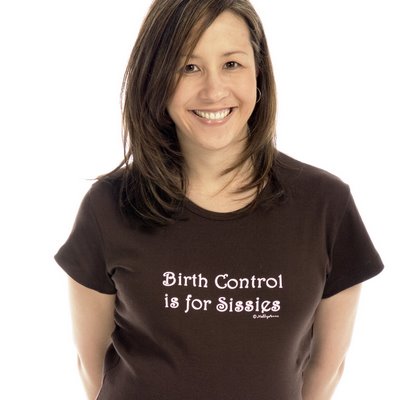
I think someone may have had a journalistic epiphany on the whole Health and Human Services thing.
But before we go there, stop and, for a moment, join me in contemplating the following journalism puzzle.
The Obama administration’s new HHS regulations — click here for a sample of GetReligion coverage — continue to cause an electric buzz here inside the Beltway. At the moment, people continue to focus on the Catholic angle of this story.
That’s logical. I get that. I mean, why would a Democratic candidate want to tick off Pope Benedict XVI in what will almost certainly be a tense election year?
Keep thinking. If this battle over the HHS rules is merely a “Catholic” story, it’s logical to think that it is essentially a story about birth control. This logic has been leading reporters to another semi-logical conclusion. They’re thinking: Most Catholics use birth control. Thus, most Catholics are not going to care about the HHS rules. The pope and the bishops are all just blowing smoke and this story is no big deal — other than to a few crazy Catholics (none in the typical newsroom, naturally) who actually care about church doctrines about sexuality.
However, if this is simply a story about birth control, logical journalists will need to figure out why so many liberal Catholics are currently so upset with the White House for picking this fight at this moment in time.
This leads us to the fact that U.S. bishops and the pope see this as a battle over issues much bigger than birth control. They see these rules as a direct attack on the religious liberty of Catholics and other believers. They see this as a First Amendment story in which the government is forcing religious groups — the institutions, not individual believers — to commit or fund acts that are sinful and evil, according to the doctrines proclaimed by these religious groups.
Seen from this angle, the ruling on birth control is simply the point on a much larger spear. The next thing you know, the U.S. Justice Department will be trying to get involved in decisions about who is hired and fired by religious groups. Wait a minute. That sounds familiar.
Please hear me say that there is no way to cover this story without hitting the birth-control angle and hitting it hard. However, there is no accurate, balanced way to handle this story without covering the larger religious-liberty angle, as well.
I also know that the potential impact of the HHS rules IS HUGE when you look at the Catholic numbers. What percentage of the nation’s health care (especially for the poor) is provided by institutions with Catholic roots or ties? Then there is the fact that the nation contains nearly 250 allegedly Catholic colleges and universities. This is big stuff, folks.
The big question for journalists is this: Which angle frames the story? Which drives the coverage?
So stop and think. If this is primarily a story about birth control, then it’s safe to say that only pro-Vatican Catholics will be screaming bloody murder these days. But that isn’t the case, is it? Instead, leaders in a wide variety of religious groups are mad as hades, because they see the larger legal picture. They are asking: Is America a place in which people have freedom of worship or freedom of religion?
Finally, I think that we have a national-level story that has found a way to frame this story accurately.
Here is the top of religion-beat veteran Rachel Zoll’s report for the Associated Press:
The Obama administration’s decision requiring church-affiliated employers to cover birth control was bound to cause an uproar among Roman Catholics and members of other faiths, no matter their beliefs on contraception.
The regulation, finalized a week ago, raises a complex and sensitive legal question: Which institutions qualify as religious and can be exempt from the mandate?
For a church, mosque or synagogue, the answer is mostly straightforward. But for the massive network of religious-run social service agencies there is no simple solution. Federal law lays out several criteria for the government to determine which are religious. But in the case of the contraception mandate, critics say Health and Human Services Secretary Kathleen Sebelius chose the narrowest ones. Religious groups that oppose the regulation say it forces people of faith to choose between upholding church doctrine and serving the broader society.
“It’s not about preventing women from buying anything themselves, but telling the church what it has to buy, and the potential for that to go further,” said Sister Carol Keehan, president of the Catholic Health Association, representing some 600 hospitals.
Keehan’s support for the passage of the Obama health care overhaul was critical in the face of intense opposition by the U.S. bishops. She now says the narrowness of the religious exemption in the birth control mandate “has jolted us.” She pledged to use a one-year grace period the administration has provided to “pursue a correction.”
I am bringing all of this up, again, for a logical reason (or two).
For starters, it will not surprise regular listeners of our “Crossroads” podcast that this issue was the subject of this week’s discussion. You can find it at iTunes or simply click here to listen online. However, the main reason we talked this through — again — is that this story is not going away. Instead, it’s taking on a life of its own on op-ed pages and in news reports (and not just because GOP types think it’s a nice reason to wound the White House).
Oh, we also spent a few minutes discussing that whole GetReligion turns eight thing.
Enjoy the podcast.
|
| Posted at 5:05 pm | Print
| Permalink | Trackback |
Comments (24) |


February 3, 2012, at 6:15 pm
That was a very well written article on this issue. I have been following it for the past week at various blogs and the AP article is one of the only ones I have seen that explained the cost of the mandate to catholic organizations and the pending legal challenge based on the RFRA (although she could have gone a little more into the four part test, which the HHS mandate likely fails).
Well-loved. Like or Dislike:
5
1
February 3, 2012, at 7:48 pm
The overwhelming numbers of reports on this story fail to state that 28 states have the same policy as the federal government has proposed. I have to wonder why there has not been an uproar in those states. As the White House writes:
http://www.whitehouse.gov/blog/2012/02/01/health-reform-preventive-services-and-religious-institutions
I also have to ask whether or not the new rules are favorable to the Catholic church in Colorado etc because they allow a religious exemption that did not previously exist.
Maybe I missed something, but in this case I think these details matter.
Hot debate. What do you think?
8
10
February 3, 2012, at 8:48 pm
Jerry,
I would hope that reports wouldn’t claim that since it’s not true. As USCCB wrote in its comments to the proposed regulation:
And the footnotes …
Well-loved. Like or Dislike:
11
1
February 3, 2012, at 11:15 pm
We don’t really have health insurance any more - it is more properly described as health plans. Once mandated coverage of preventive measures and elective procedures were required, the element of risk was pretty much eliminated.
Now it’s as if auto insurance was required to cover tune-ups, oil changes and the like.
I’m glad to see the recognition that the real issue here is the government’s decision that it has the right to determine what qualifies as religious activity - and confining and shoving religious activity into Sunday morning or Friday noon or Friday evening “worship” service.
The Catholic justice and peace people, the reliable liberal supporters, have awoken to the danger. I’m astonished at the names I see that are objecting to the HHS pronouncement who don’t give a fig about birth control.
Only a few media are making this observation. Great analysis by Get Religion folk.
Well-loved. Like or Dislike:
6
0
February 4, 2012, at 12:35 am
I just saw Shields and Brooks on PBS.
Shields says this is cataclysmic for the administration and Brooks agrees.
Both think this is a vastly under-reported issue.
Judy Woodruff seemed surprised at their opinions.
Well-loved. Like or Dislike:
8
0
February 4, 2012, at 2:30 am
Mollie, that’s the wrong link. Go here for the pdf download of submissions made by USCCB General Counsel on behalf of the USCCB to HHS on 31 August 2011. Your quote is from section I B (pp.3f.), and there is further information on State exemptions at section II A (pp.13f.).
The same document also includes submissions made to HHS on 17 September 2010 (Addendum A) commenting on the “Interim Final Rules” published by HHS on 19 July 2010.
The USCCB has been diligently lobbying on this subject for 18 months.
Well-loved. Like or Dislike:
5
0
February 4, 2012, at 7:18 am
Thanks for pointing to Shields and Brooks on this, Julia. I was surprised to find *both* of them so in agreement on this.
Even more interesting, though, and it may help explain the Administration’s position and the way the media is reporting it, is the comments under the video and transcript. No discussion of the other issues in the discussion. Almost no-one engaging in their political discussion of the Administration’s stand - that this is an unprecedented break with America’s tradition on the issue of conscience clauses, and that it will alienate a lot of people who supported Obama. Rather the comments are overwhelmingly angry that Shields and Brooks are ‘supporting’ the bishops on this.
If one assumes that the kind of people who watch PBS News shows are the kind of consumer that journalists have in mind as their ‘ideal reader/viewer’ then this would indicate just how hard it would be for journalists to ‘get’ the issue, and then to report on it in a way that covers both sides.
Well-loved. Like or Dislike:
6
0
February 4, 2012, at 8:32 am
Apologies for a mega-post, tmatt, but you mention the Catholic numbers, so let’s scrutinize one statistic used by the White House in favour of the HHS “preventive services” mandate: that 98% of sexually active Catholic women have used contraception. I am not sure what mileage it is getting in the media (try this CNN Special, though, for a recent opinion piece using it), but the argument as posted on the White House blog with the USCCB response can be found here.
The polemical point appears to be that in raising the conscience issue the bishops are talking in purely theoretical terms. So it’s a bogus issue, right?
The argument draws on a Guttmacher Institute report on “Religion and Contraceptive Use” dated April 2011 (the news release with link for pdf download is here). The report analyses data in the specific context of the debate over the HHS mandate. It was based on data extracted from the 2006-2008 National Survey of Family Growth (NSFG, see the Center for Disease Control website). The data covered only females aged 15-44.
First notice that the headline statistic (99% of all women, and 98% of Catholic women) is of those who have had sex and have ever used contraception. If true (and supporting data are lacking) it is not a metric of regular and consistent contraceptive usage, let alone of recent or current usage. It is of limited value.
[1] The NSFG surveyed 7,356 respondents who were asked to self-identify under one of five groups: Catholic, “mainline Protestant”, “evangelical Protestant” (as defined), “other” (undefined) and “none”. Among self-identifying Catholics (25% of the total = 864 respondents), 11% (202) never attend Mass, and another 29% (533) attend Mass less frequently than once a month.
[2] For purposes of the report, “sexually active” means those who had had sex at least once in the three months prior to the interview - wide enough to cover, for example, a single case of non-consensual sex.
[3] Of respondents self-identifying as Catholic, 47% (864 women) were married. We are told that at any one time 14% of married women (of all and no religious affiliation) are pregnant, postpartum, or trying to get pregnant. Thus 120 married Catholic respondents were “not at risk of pregnancy” - as the report lugubriously has it - whereas 744 were (and so were susceptible to contraceptive usage).
[4] As for the 53% (975) of Catholic respondents either not currently married or who had never married, all we are told is that 70% of those who have never been married are “sexually active”. At most, this sub-set of “sexually active never-married Catholics” was therefore 682 strong (70% of 975), and the sub-set of never-marrieds not “sexually active” was 975 - 682 = 293.
[5] Pausing there, the “not-at-risk” marrieds (120) and the never-married not “sexually active” (presumptively 293) are prima facie not susceptible to contraceptive usage – at least, not currently. Out of the sample of 1,839 Catholics, 120 + 293 = 413 (or 22.5%).
[6] It follows that 1,839 - 413 = 1,426 self-identifying Catholic respondents (including some unknown but guessable proportion of those who never attend Mass or attend less than once a month) were susceptible to contraception usage.
[7] On usage, the Guttmacher report notes:- “[Analysis of c]ontraceptive use was restricted to women at risk for unintended pregnancy, whom we define as those who had had sex in the three months prior to the survey and were not pregnant, postpartum or trying to get pregnant.” Otherwise, “current contraceptive user” - although regular or consistent use is not required.
[8] Thus, if a respondent had (a) had sex in the three months prior to the survey, and (b) had used any method of contraception - even if only once – in the most recent month in which she had had sex, she counted for the purposes of the Guttmacher report as a “current contraceptive user”.
[9] Among “current contraceptive users” who self-identify as Catholic, the report says 68% practised “highly effective methods” (viz. sterilisation, hormonal intervention, IUD), another 15% used condoms (implicitly not highly effective), 11% used no method at all, and 1% used one or other type of NFP; the balance relied on withdrawal or spermicides. Recall that even one instance of contraceptive use in the previous three months counts as “current contraceptive use” for the purposes of the report.
[10] So finally we have it. Of the 1,426 self-identifying Catholics who counted as “sexually active current contraceptive users”, 68% (= 970) had used a “highly effective method” at least once in the three months prior to the interview. Thus, out of 1,839 self-identifying Catholics, all the Guttmacher report tells us is that 970 (53%) had used a “highly effective method” of contraception at least once in the three months prior to the interview. The next step (if the White House really wants to pursue the “bogus argument” route against the US bishops, is to identify how many of those 970 practise their faith even to the extent of monthly Mass attendance.
Am I wrong?
Well-loved. Like or Dislike:
20
1
February 4, 2012, at 9:11 am
We catholics used to know that we are sinners, and those hailing from the Mediterranean and S.America used to handle it with grace. We used to have a clear distinction of what we have to do and what we really do. But, what’s Confession for ?
On the whole of this HHR affair, even most extraordinary than the unanimity on the Catholic side, the support of many non catholics, and the inability of the MSM to handle it, is why on Hell did the Obama Administration pushed such a controversial measure in a rather inconvenient political moment?
As a very simple “Gedankexperiment”: If Obama won 52-48 in 2008. It is estimated that over 15% of his vote was catholic. Being everything equal (hardly) if the HHS mandate manages to get him rid of a bit more of 10% of the catholic vote, he’ll lose any advantage …
Well-loved. Like or Dislike:
8
0
February 4, 2012, at 9:27 am
An addendum.
In an european context we would think this measure would be pushed to get/recover support from the more radical, which could offset the loses; but does this still not commited radical vote exist in sufficient quantities ?
Like or Dislike:
1
0
February 4, 2012, at 10:20 am
Bain Wellington, thanks for the superb analysis of the data. Would that journalists would do the same kind of hard work.
Asshur, the Catholic apologist Jimmy Akin asked essentially the same question you did: “I mean, if you’re already mandating free contraceptives for virtually the whole population then you’ve got about all the bounce from your base that you are going to get. Forcing Catholic schools, hospitals, and charities offer free contraceptives to those they provide insurance to is going to create a lot of bad press, and simply allowing a religious conscience exception for those institutions would allow you to have the same base bounce without the bad press.” I answered him thus:
3) “I mean, if you’re already mandating free contraceptives for virtually the whole population then you’ve got about all the bounce from your base that you are going to get.” False. Ever heard of blood lust? Cage fights? The Coliseum? He can get a base bounce by taking it and forcing it down our throats. I think you underestimate the absolute hatred, contempt, revulsion and zealous abhorrence these people have for the Church.
4) “Forcing Catholic schools, hospitals, and charities offer free contraceptives to those they provide insurance to is going to create a lot of bad press…” False. In fact, by and large, the media are ignoring it (http://www.getreligion.org/2012/01/catholics-outraged-media-unimpressed/). Granted, the WaPo editorialized against it. But for the most part, it’s like the MSM are holding their ears in front of a couple hundred bishops saying, “I’m not listening” (cue Miracle Max).
Well-loved. Like or Dislike:
9
1
February 4, 2012, at 1:22 pm
Mollie,
First, based on your reply, I really want to know what the Catholic church and charities did in California, Georgia and Vermont since they’re acknowledged cases where such coverage is mandatory in all circumstances. That in itself is a serious point and worthy of coverage to round out our understanding of the issues involved and the consequences.
I also suspected that a bit of framing is involved in both the White House web site and what you cited. So I did some searching and found the following for Colorado.
http://www.prochoiceamerica.org/government-and-you/state-governments/state-profiles/colorado.html?templateName=template-161602701&issueID=17&ssumID=3035
So it seems that the part of the “First” point in your post is correct. A significant distinction in Colorado is the prescription drug difference. So has there been any media attention specifically to that White House list?
But unfortunately what you cited in your post, “the footnotes” are not in the URL you provided so I could not read that part in context.
But to offer an opinion on Terry’s point: he’s right about framing.
I would like to see the issue framed first by exploring more facts including clarifying what has happened in the three states with strong mandates.
I also know that this issue will be in the court system unless there is either a change in policy or a new law. Because this is a serious situation challenging the boundary between a secular society and a group’s religious rights so I’d also like to read a story exploring any similar historical parallels to the current situation.
Like or Dislike:
2
0
February 4, 2012, at 1:39 pm
” The overwhelming numbers of reports on this story fail to state that 28 states have the same policy as the federal government has proposed. I have to wonder why there has not been an uproar in those states. ”
Maybe the Admin was counting on the boiled frog principle?
Like or Dislike:
2
0
February 4, 2012, at 1:44 pm
Gerson isn’t on the editorial staff of the Washington Post. He was allowed to have his opinion piece in the paper same as Romeny has a piece on the same subject in the Washington Examiner. I don’t think he’s even a regular columnist.
http://www.washingtonpost.com/opinions/obama-turns-his-back-on-catholics/2011/11/14/gIQABHCKMN_story.html
The Washington Post’s columnist E.J. Dionne is also identified as an Opinion Writer.
http://www.washingtonpost.com/opinions/obamas-breach-of-faith-over-contraceptive-ruling/2012/01/29/gIQAY7V5aQ_story.html
Here’s a list of the Post’s Editorial board and an explanation of how they present the institution’s opinions.
I didn’t see any editorials about the HHS decision.
http://www.washingtonpost.com/opinions/the-posts-view/2011/12/07/gIQAoEIscO_viewAll.html
I did find one news article in the Washington Post from yesterday about the HHS issue and the bishops, but it was an AP article, not written by any WashPo staff.
http://www.washingtonpost.com/national/health-science/white-house-religious-groups-in-fight-over-doctrine-religious-freedom-and-contraception/2012/02/03/gIQAFe3ImQ_story.html
Well-loved. Like or Dislike:
4
0
February 4, 2012, at 1:54 pm
Bain,
I’m not sure about Georgia or Colorado, but in California, Catholic Charities sued the state arguing that the exemption was too narrow. Catholic Charities lost the case in the Cal. Supreme Court and the US Supreme Court denied review. Here is a lick to an info page on the case: http://archive.firstamendmentcenter.org/faclibrary/case.aspx?case=Catholic_Charities_of_Sacramento_Inc_v_California
The case against the federal mandate is much stronger than the state cases because of the federal Religious Freedom Restoration Act, which provides a stricter level of scrutiny for federal laws and regulations that infringe on religious freedom. For a good analysis of how RFRA impacts the HHS mandate (from Ed Whelan at National Review), see here and follow the links to the previous posts:
http://www.nationalreview.com/bench-memos/289635/hhs-contraception-mandate-vs-rfra-some-closing-observations-ed-whelan
Well-loved. Like or Dislike:
5
0
February 4, 2012, at 1:57 pm
Julia,
here is the WaPo’s editorial board’s position against the narrow exemption:
http://www.washingtonpost.com/opinions/respecting-religious-exemptions/2012/01/22/gIQA0ZESJQ_story.html
Like or Dislike:
3
0
February 4, 2012, at 2:00 pm
The AP story must be given credit for “getting” what the issue is about. Right up at the top:
Kudos to whoever at AP wrote this piece. Lots of facts and quotes from all perspectives from credible people.
The key observation:
Read the whole thing. I didn’t see who the main writer was, but there is this that should be mentioned:
“Associated Press writer Ricardo Alonso-Zaldivar in Washington contributed to this report.”
http://www.washingtonpost.com/national/health-science/white-house-religious-groups-in-fight-over-doctrine-religious-freedom-and-contraception/2012/02/03/gIQAFe3ImQ_story.html
Like or Dislike:
3
0
February 4, 2012, at 7:04 pm
MikeD, thanks for that link to the California decision. So far I’m unable to find out what Catholic charities have done in California since that ruling went against them. As far as I can see, Catholic charities continue to operate in California so have they dropped health care or do they offer health care with the contraception mandate.
Like or Dislike:
0
0
February 4, 2012, at 7:10 pm
MikeD
Thanks for the editorial link. I hadn’t look back that far.
Like or Dislike:
0
0
February 5, 2012, at 1:21 am
What’s the old joke headline? End of world coming — Women and minorities hit hardest.
I kind of feel a similar way about this whole issue. In the podcast you admonished some writers for focusing solely on Roman Catholics and contraception. You stated that you felt that more writers would step back and see that this affects all religions and it’s a religious freedom issue. I would suggest taking another step back and see how this would affect non-religious non-profits. They are agenda-driven and for some these same laws negatively impact them. For other non-profits they may be fine with these regulations but may have issues with other ones. From there take yet another step back. Some for-profit companies will likely have trouble with this or other labor laws.
Now I don’t think this really a religious mirage (that’s the exact opposite of a religious ghost where a reporter sees a religious angle where there isn’t one) but it’s shortsighted for any article on this issue to focus solely on the religious impact without even acknowledging the bigger picture. As you said in the podcast, “The HHS folks have decided that they get to determine how religious insitutions handle health care in general…” And while that is a correct statement, it’s making it sound as though HHS solely targeted religious institutions with this regulations. If I can be extra nitpiky for a moment, it would be more accurate to say, “The HHS folks have decided that they get to determine how employers handle health care in general, regardless of if they are religious or not.”
Like or Dislike:
3
0
February 5, 2012, at 11:06 am
Correction: At [1] of my long post, delete 25% of the total = 864 and substitute 25% of the total = 1,839. The sample was 7,356 respondents, so the 25% who self-identified as Catholic amount to 1,839 respondents (that’s the number I use in [5], [6], and [10]) not 864. The other calculations in [1] are based on the correct number: thus the 11% of 1,839 self-identifying Catholics is indeed 202 people, and the 29% who attend Mass less than once a month is indeed 533 people.
864 (which is 47% of 1,839) occurs in [3] and is the tally of married Catholics in the sample.
To Thomas (for his generous words) and those others who liked my post, my apologies for that careless error.
Like or Dislike:
0
0
February 5, 2012, at 11:35 am
Jerry, sorry I misidentified you as Bain in my earlier post.
Bain, thanks for delving into the statistics so well.
Like or Dislike:
0
0
February 5, 2012, at 9:02 pm
This story isn’t about exemptions for the Church or any religious organization. Such exemptions pacify the visible leadership of a church and take it out of action. Employers, not lucky enough to qualify as churches, will still either have to collaborate with sin or close their doors. The story here is the government waging no-holds-barred cultural war on the consciences of beleaguered citizens, who, we are increasingly conditioned to believe, have (quite literally) no God-given right to employ or be employed at liberty and without undue constraint.
Like or Dislike:
1
0
February 6, 2012, at 6:05 am
Seems that someone at LAT has made the same questions than me
http://www.latimes.com/news/nationworld/nation/la-na-contraceptives-fight-20120206,0,2117906.story
Please notice how the one pollster cited works both for the Dems and Planned Parenthood …Implicit in their analisys is that their “business” is more important for their remaining voters than any “religious liberty” issue. NO interest in recovering votes from the center …
Like or Dislike:
0
0