
If I had to sum up, in one punchy thought, what I learned while doing a graduate degree in Church-State Studies here is what I would say: When in doubt, it is wrong for the government to become “entangled” in the lives of religious groups and people.
There are many ways that this can happen. The government could discriminate in favor of one or more religions. On issues of free speech and association, government leaders could decide that religious faith is uniquely good or uniquely bad, in comparison to other subjects advocated by non-profit groups. It could relate to religious content and work in ways that are different from how it relates to, oh, science, arts, sports, etc., etc.
Oh, you might ask, but what is a “religion”? And are there any limits — such as profit, fraud or clear threat to life — that can be placed on religious life, even when linked to doctrine and ministry?
Welcome to the big questions of church-state life and law.
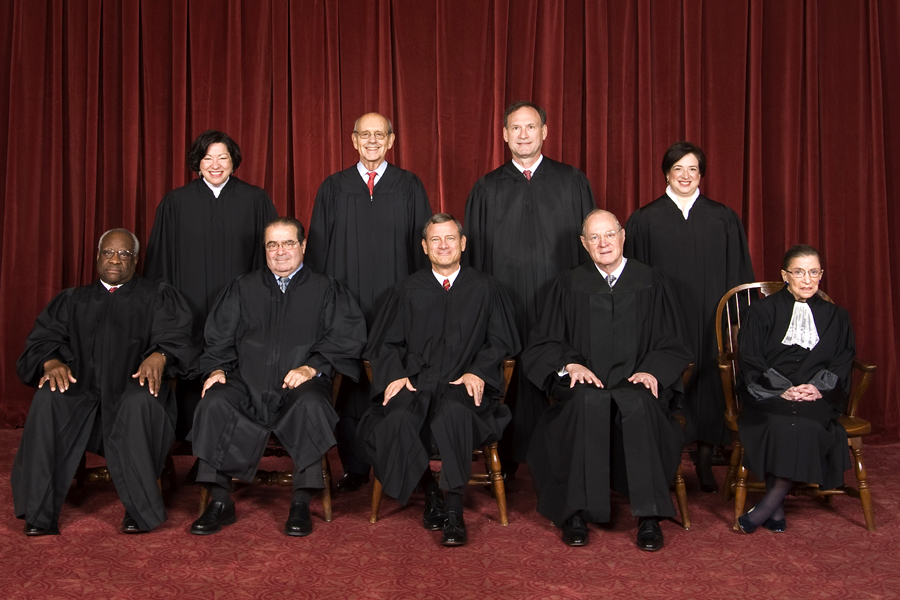
This brings us, of course, to that stunning U.S. Supreme Court decision — a rare 9-0 vote — affirming the concept known as the “ministerial exception.” There are many stories to consider, but let’s walk our way through the main report produced by the scribes at the high church of American journalism, The New York Times.
My goal is to critique some of the coverage, but also to note some of the terms that need to be discussed in future coverage. You see, there are landmines all the way through this report, issues on which there is sharp disagreement between conservatives, liberals and the emerging camp on the cultural left containing those who are less committed to the old liberalism’s fierce defense of free speech, freedom of association and freedom of religion (as opposed to freedom of worship). The lede states the basics:
WASHINGTON — In what may be its most significant religious liberty decision in two decades, the Supreme Court on Wednesday for the first time recognized a “ministerial exception” to employment discrimination laws, saying that churches and other religious groups must be free to choose and dismiss their leaders without government interference.
One of the central issues appears in the lede. Note that the Times immediately underlines a difference between “churches” and other “religious groups.” Ah, but should the state have the power to make that distinction? Why is the practice of religious freedom in a church different than the practice of religious faith in, oh, a daycare center or a school? Also note the reference to the decision applying to religious “leaders.” Ah, but who is and who is not a “leader”?
Moving on.
“The interest of society in the enforcement of employment discrimination statutes is undoubtedly important,” Chief Justice John G. Roberts Jr. wrote in a decision that was surprising in both its sweep and its unanimity. “But so, too, is the interest of religious groups in choosing who will preach their beliefs, teach their faith and carry out their mission.”
Note that Roberts, in this crucial passage, does not mention worship but seems to emphasize teaching. Even the word “preach” cannot be limited to a sanctuary. As Anglican Bishop Desmond Tutu once noted, during the apartheid era in South Africa, one man’s street-corner preacher is another man’s rebel political activist.
Next, the Times expands on this specific issue:
The decision gave only limited guidance about how courts should decide who counts as a minister, saying the court was “reluctant to adopt a rigid formula.” Two concurring opinions offered contrasting proposals.
Whatever its precise scope, the ruling will have concrete consequences for countless people employed by religious groups to perform religious work. In addition to ministers, priests, rabbis and other religious leaders, the decision appears to encompass, for instance, at least those teachers in religious schools with formal religious training who are charged with instructing students about religious matters.
And the pivotal, God-is-in-the-details words in that passage? They are “at least.” Also note the telltale “appears.” The Times needs informed viewpoints on both sides of the word “appears.” Ditto for other newsrooms covering this story.
Moving on. Does the state really have the right to define, for religious groups, what subjects are “religious matters” and what are not? Wouldn’t that entangle the state in crucial doctrinal definitions and decisions? What about religious groups that do not require “formal training” for leadership roles? Is a daycare worker with a high-school diploma carrying out a religious group’s “mission” when she leads toddlers in prayer? What if the church-based daycare center requires her to sign a doctrinal covenant as a condition of holding the job, a lifestyle covenant to teach the faith in all that she says or does?
You can see the entanglement issue emerge as the Times offers the point of view of the defendant:
Douglas Laycock, a law professor at the University of Virginia who argued the case on behalf of the defendant, a Lutheran school, said the upshot of the ruling was likely to be that “substantial religious instruction is going to be enough.”
Asked about professors at Catholic universities like Notre Dame, Professor Laycock said: “If he teaches theology, he’s covered. If he teaches English or physics or some clearly secular subjects, he is clearly not covered.”
Really? Physics is, in the post-Big Bang era, a “clearly secular” subject with zero religious overtones that could be explored? Would it be entanglement for the state to tell a Catholic college that it could not discriminate in favor of hiring those who affirm Catholic doctrines when hiring, let’s say, an English professor who will teach classes on morality and Catholic thought in Shakespeare? How about a political science professor who will teach classes linked to abortion, the death penalty, war and peace? Are these professors, in the context of explicitly religious schools, engaged in the “integration of faith and learning” or merely secular work?
Now, read the rest of the story and, perhaps, the Washington Post report on the same topic. You can see, now, where journalists need to seek informed, articulate voices on both sides of these debates.
The Times story, I will note, takes narrow, limiting stands on all of these issues, almost as narrow as those affirmed in this case by the current leadership of the U.S. government. The administration, the newspaper did note, had argued that the defendant’s case should be handled as if “she had been employed by a church, a labor union, a social club or any other group with free-association rights under the First Amendment.”
Oh really? Religious groups do not have the right to employ staffers — some religious groups, remember, do not even have ordained clergy — who believe what they believe and attempt to live in a way consistent with the group’s laws and traditions? The Times works this thought in, care of a concurring opinion:
… Justice Clarence Thomas wrote that the courts should get out of the business of trying to decide who qualifies for the ministerial exception, leaving the determination to religious groups.
“The question whether an employee is a minister is itself religious in nature, and the answer will vary widely,” he wrote. “Judicial attempts to fashion a civil definition of ‘minister’ through a bright-line test or multifactor analysis risk disadvantaging those religious groups whose beliefs, practices and membership are outside of the ‘mainstream’ or unpalatable to some.”
This resembles, of course, the legal battles over who is and who is not covered by the confidentiality protections extended to priests who hear confessions. How does this apply to religious groups that have counseling, but not sacramental confession?
There will be much more debate to come. It is especially important to see who mainstream journalists allow to interpret this decision in future analysis reports. Watch for voices on both sides of the these divisive issues. Even a 9-0 decision cannot answer all of these explosive church-state questions.
Editor’s note: We will, of course, not be arguing about the religious or legal issues here, unless they are directly linked to the journalistic challenges that shape the coverage of this story.
|
| Posted at 11:39 am | Print
| Permalink | Trackback |
Comments (18) |


January 12, 2012, at 12:03 pm
“Other religious groups” might have been an attempt to include non-Christian religions that don’t call their meeting places or organizations “churches.” But I think it was sloppy; Mr. Liptak should have just said “religious groups” or maybe something like “churches, mosques, synagogues and others.” Since it’s in the lede and needs to be brief, I think the first one works better even though it’s still a little inexact.
I’d be curious if there were any other religious leaders or persons who were cautious about the ruling other than Rev. Lynn; that he has concerns is unsurprising. I’d also liked to have seen what the legal experts quoted in the story had to say about the concurring opinions and their impact on how this decision will play out — but maybe that’s going to be in the second-day pieces.
I appreciate that Mr. Liptak and Ms. Goodstein walked the reader through Chief Justice Roberts’ chain of reasoning for his opinion succinctly and informatively.
Well-loved. Like or Dislike:
4
0
January 12, 2012, at 12:17 pm
BRETT:
No, with the language on TEACHING, I would bet the bank that one of the key elements of these debates was how to stress that religious liberty is bigger than freedom of WORSHIP. Religious liberty is way, way bigger than what happens in sanctuaries. Would the court say that a missionary group’s headquarters is not religious? That ministry does not occur there? How about a homeless center? Does ministry only take place inside the chapel?
Well-loved. Like or Dislike:
6
1
January 12, 2012, at 12:24 pm
The decision seems to be so vague, I don’t know what the NYT could have done to make the report more specific. The questions that tmatt raises are excellent, but they were not answered in the decision and any attempt to answer them must be speculative. Clearly, Clarence Thomas did not think they were answered or he would not have troubled to write the sweeping dissent he did. The problem with the kind of sweeping generalizations engaged in by Thomas is that most religions these days are also businesses and corporations rather than simply churches.
Hot debate. What do you think?
4
5
January 12, 2012, at 12:31 pm
Professor Laycock’s opinion that hard sciences are “clearly secular” may be right as a matter of constitutional jurisprudence but it is contrary to how Catholic universities should, and many do, conceive of themselves. It is mainstream Catholic theology, dating from St. Augustine, that faith precedes understanding and that, consequently, theology is the queen of the sciences: all understanding, including that of the hard sciences, is hierarchically lower than, and dependent upon, theology. On this much has been written in the history of Catholic theology; it is a central issue. See, e.g. Newman’s “The Idea of a University,” and, more recently, Alasdair MacIntyre’s “God Philosophy Universities.”
Well-loved. Like or Dislike:
11
1
January 12, 2012, at 12:36 pm
I think this was a bad case for anyone, pro- or anti-religious exemptions, to make decisions on so I’m not surprised the Supreme Court came to the decision it did; when the administration chiming in on the case and seeming to ignore the constitution, what else could they do but say the relevant articles applied?
Personally, I think this should have been decided as employment law and that the school was ill-advised to throw religion into the mix, but I don’t know how American law regulates teachers out on prolonged periods of sick leave, so maybe they felt this was the only way for them to go.
I don’t think anyone can or should be too happy with how this one went, but the newspaper reporting seems - on the whole - to have been even-handed and fair; I didn’t see any “Institutionalised sexism! Abuse of power! Religious maniacs!” style commentary.
Well-loved. Like or Dislike:
8
2
January 12, 2012, at 1:07 pm
First, this is a very important ruling so I’m very glad you covered it. I think your comments about physics teachers etc is overly alarmist although no doubt we’ll see lawsuits about that as we see about everything else in our society.
The key point in the decision is what I’ve seen repeated in the media coverage: the duck test that the Court applied. In this case including a, call it “DNA test for duck nature”:
So I’d bet that to avoid certain kinds of suits, religious organizations will be very clear about who meets that test and who does not. So we’ll see employment contract wording that says something like:
I also think the other concurring opinion should be included in all news reports because it underlines the “duck test” argument:
Well-loved. Like or Dislike:
8
0
January 12, 2012, at 3:50 pm
“No, with the language on TEACHING, I would bet the bank that one of the key elements of these debates was how to stress that religious liberty is bigger than freedom of WORSHIP. Religious liberty is way, way bigger than what happens in sanctuaries. ”
Maybe so, since every group defines worship in its own way. Traditional Judaism teaches that study of sacred texts constitutes worship, so a Beit Midrash (lit: house of learning or interpretation) is considered a holy place, regardless of whether or not it contains a sanctuary for formal worship. Likewise the Yiddish shul (lit: school) denotes a synagogue.
Like or Dislike:
3
0
January 12, 2012, at 4:14 pm
Religion is involved in more than WORSHIP, even in a sanctuary. That’s part of the current disagreement with the Obama administration that has taken to speaking of freedom of worship instead of freedom of religion, as addressed in the Constitution.
Somehow the public discourse has adopted the word WORSHIP - as in the former PSA that spoke of attending your “house of worship” each week. It has become a sort of shorthand for what churches and synagogues, etc. do. But this administration is edging toward taking that literally - limit the freedom to church on Sunday attendance and not include the other things associated with practicing a faith.
I’d like to see somebody address the terminology difficulties.
We don’t have the vocabulary that pertains to all faiths - so the SCOTUS expects more cases to refine the issue.
Well-loved. Like or Dislike:
5
0
January 12, 2012, at 4:14 pm
tmatt —
I agree that the question of religious freedom is much much bigger than the one in the case. But I think that the lede uses “church” in its “religious organization” meaning, rather than its “house of worship” meaning, and that’s where my comment comes in.
This story and other coverage makes it seem as if the court leaned towards as narrow a decision as the case made possible — one reason, maybe, that Justice Thomas wrote his own opinion that indicates he would like the decision to cover more ground than it did. Another commenter noted how Chief Justice Roberts’ opinion cited that the complainant referred to herself as a called teacher or minister — the Court was only going with the definitions used by the parties involved and not making any of its own — and that citation to me also indicates the majority wanted to step on only one land mine at a time.
Well-loved. Like or Dislike:
6
0
January 12, 2012, at 4:24 pm
“Somehow the public discourse has adopted the word WORSHIP - as in the former PSA that spoke of attending your “house of worship” each week. It has become a sort of shorthand for what churches and synagogues, etc. do. But this administration is edging toward taking that literally - limit the freedom to church on Sunday attendance and not include the other things associated with practicing a faith. ”
Unsurprising, given that most surveys define degree of religiosity by attendance at communal worship services rather than using a checklist of behaviors.
Like or Dislike:
4
1
January 12, 2012, at 5:47 pm
and
tmatt got rather muddled here over “the defendant”.
Ms. Perich laid a charge with the EEOC complaining violation of her statutory rights under the Americans with Disabilities Act. The EEOC then filed suit against the Hosanna-Tabor Evangelical Lutheran Church and School (which was the defendant) on behalf of Ms. Perich (who intervened in the suit, presumably as co-plaintiff). The case went to the Supreme Court by way of petition for certiorari, in which Hosanna-Tabor was the petitioner and the EEOC was the respondent. Ms. Perich was co-respondent, not defendant.
Just saying.
Like or Dislike:
4
1
January 12, 2012, at 5:49 pm
I’m surprised at how little coverage on this story pointed out how strongly the Obama Administration had taken the “anti-religion” side yet was strongly rebuffed by even the liberal wing of the Supreme Court, including two Obama appointees. Such was not mentioned in(or at the tag end of) virtually all the stories I saw on this decision (although Fox on Fox and Friends gave the “rebuff” angle good play).
This mostly ignored angle is extremely important, because a number of religious (including bishops) and political leaders have loudly opined that the Obama Admin. is very unfriendly to religion (the Christian religion especially and the Catholic religion in particular) but have been brushed off by the media (As Newt Gingrich pointed out at a media run debate recently).
That liberal justices— including Obama appointees— all lined up against the Admin’s. position in this case certainly lends some credence to the complaints about the actions and attitudes of this Admin. out of sight of the major headline stories.
Well-loved. Like or Dislike:
9
5
January 12, 2012, at 6:31 pm
Deacon John,
Is it possible that the Supreme Court Justices ruled according to the law, period? And is Obama anti-religion or is that an interpretation and a judgement, things good journalists should refrain from doing? Fox has its orientation, just like MSNBC and CNN.
I am surprised that no one has commented on the demographic composition of the current group of judges. Would the decision have been unanimous if one or more of the justices came from a different faith? Both Catholicism and Judaism have ancient and well-defined bodies of religious law, where it is understood that religious law is binding on adherents.
Well-loved. Like or Dislike:
8
2
January 13, 2012, at 12:58 am
More pertinent than ethnicity or religion, all of the justices came from Harvard (6)or Yale (3) Law schools. Three are from New York City, two from Trenton,New Jersey, and two from California. Justice Thomas is from Georgia. Chief Justice Roberts is from Buffalo, New York.
http://www.supremecourt.gov/about/biographies.aspx
And while six are Catholic, they range across the board on tmatt’s taxonomy of types of Catholics. I don’t know how the Jewish justices fall out on matters of belief and practice.
As to unanimity, this article claims that in the 2010 term, 48% of decisions were unanimous and another 28% had only one or two dissenting votes.
Hope this isn’t off topic. It should, however, provide some context for understanding the unanimous nature of the decision.
Well-loved. Like or Dislike:
4
0
January 13, 2012, at 10:30 am
Passing By,
Minor quibble: Ginsburg attended Harvard Law but received her LL. B. from Columbia.
As to religion, cultural biases remain long after observance flags. To members of faiths with more amorphous infrastructures and little to no religious hierarchy, the self-designation of insert-name-for-clergyperson-here might have seemed unimportant.
Like or Dislike:
1
1
January 13, 2012, at 1:01 pm
The absolutely best supreme court reporter on the airwaves is Nina Totenberg on NPR-here’s her report on the ruling: http://www.npr.org/2012/01/12/145080772/high-court-exempts-ministers-from-anti-bias-laws She has a way of simplifying complex legal issues without dumbing them down. One question she raises: what would the supreme court say if a “minister” was fired for reporting sexual abuse, or a health and safety violation?
In print, the SCOTUS blog excels: http://www.scotusblog.com/2012/01/opinion-recap-a-solid-ministerial-exception/. Always well written on legal issues.
Like or Dislike:
4
1
January 13, 2012, at 1:54 pm
Maybe NYT and WP could take a lesson from a succinct and thorough report like this from yesterday:
http://www.worldmag.com/webextra/19038
Like or Dislike:
0
0
January 14, 2012, at 7:52 pm
Actually other religious groups includes things like Bible societies and various religious charities that are clearly religious in organization and purpose but are not “religions” or “Churchs” by the vast majority of definitions.
Like or Dislike:
0
0