
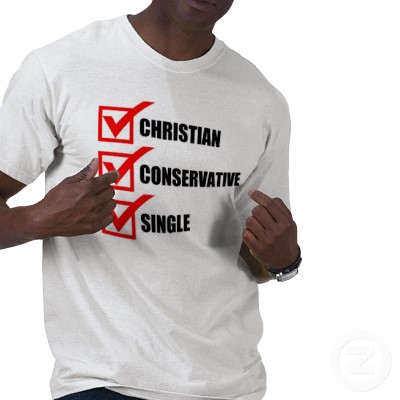
Maybe you’ve heard: Conservative Christian voters are going to be a big deal in the 2012 U.S. presidential election.
This isn’t really news. It’s be a reality for a few decades now, and it’s been heavily covered since the rise of George W. Bush. But is the role of conservative Christian voters — often mistakenly just called “evangelicals” — such old news that daily newspaper readers can be assumed to know all the background without it being spelled out?
For instance, this story from the Los Angeles Times gives an OK survey of how most of the Republican presidential candidates played at the Faith and Freedom Coalition conference in Washington. But it never gets below the surface of how conservative Christians feel about these candidates and it doesn’t even explain why these candidates care.
Reporter Paul West’s lede is painfully weak:
Competition for the hearts and votes of Christian conservatives is as wide open as the broader 2012 Republican contest, if a two-day gathering of political activists is any indication.
And you’re five or six paragraphs into the story before you realize that there’s no nut graph here. Not unless you consider this meaningless quote from Ralph Reed to be a nut graph:
Social conservatives aren’t “any different from other primary voters. A huge number of them are just totally undecided,” said Ralph Reed, a longtime religious-right strategist who founded the sponsoring group, designed to bring evangelicals and “tea party” voters under the same tent.
Huh. See how “conservative Christians” became “social conservatives,” which became “evangelicals” — all without explanation. To be sure, there is a lot of overlap. But those are three distinct groups.
You might also be wondering what’s with the quotation marks around “tea party.” Bizarre. But, actually, you’ll find lots of one-off quoted words in this story. What I can’t tell is if they’re scare quotes or just a reporter being overly cautious. That reporter is Tribune Co’s national political correspondent for all its papers, so I wouldn’t really suspect the latter. And, to be honest, I can’t say I’m not scared by lots of aspects of the tea party movement. But back to the journalism …
A bright note in Paul West’s story is his depiction of how these candidates played to what we have to assume are the political interests of those political activists who attended this conference. (Folks like this guy.) Take for instance this section, starting with U.S. Rep. Michelle Bachmann:
Bachmann, expected to announce her presidential intentions this month in Iowa, repeatedly brought the crowd out of its chairs with a blend of red-meat rhetoric and autobiographical detail. She attacked Planned Parenthood as a “corrupt organization,” swore a tireless commitment to repeal of “Obamacare,” deplored what she claimed was Obama’s “shocking” betrayal of Israel, and finished up, eyes closed, with a two-minute prayer.
Also addressing the audience were former Massachusetts Gov. Mitt Romney, who described the federal debt as a “moral tragedy,” and former U.S. ambassador to China Jon Huntsman, who touted his record as an abortion foe and tax cutter while governor of Utah. Both are Mormons, which, according to a recent Pew Center opinion survey, puts them at a disadvantage in seeking support from white evangelical Protestants.
Huntsman, a day after leaving the event, said he planned to skip Iowa’s caucuses, where evangelical Christians cast as much as 60% of the vote. Romney has not committed to competing aggressively there either. That apparent skittishness led a prominent social conservative to question the sincerity of their appeals for evangelical support.
Interesting details. This is also as close as the story gets to explaining why anyone in this race cares about conservative Christians/social conservatives/evangelicals. But there is much more that could have been said. And, despite all we already know, I think that in this case it should have been.
IMAGE: Get the shirt at Zazzle
|
| Posted at 11:35 am | Print
| Permalink | Trackback |
Comments (13) |


June 10, 2011, at 1:52 pm
“See how “conservative Christians” became “social conservatives,” which became “evangelicals” — all without explanation. To be sure, there is a lot of overlap. But those are three distinct groups.”
Perhaps we should simply count our blessings that it wasn’t “bitter-clingers,” and then “fundamentalists,” and then “sumb*tches” and call it a day.
Hot debate. What do you think?
10
8
June 10, 2011, at 1:57 pm
30 years after the religious right (or social conservatives) emerged as GOP power brokers, does a reporter in 2011 really need to explain why the candidates care about them? Maybe the reporter gives his readers more credit than you do when it comes to them understanding the issues at play.
Hot debate. What do you think?
6
5
June 10, 2011, at 2:08 pm
I’d add that I actually like the idea of putting “tea party” in quotes. There is no “Tea Party” but instead a loose arrangement of groups—often in disagreement with each other—who claim the banner of the “tea party,” At this stage, it is a label largely without a meaning and worthy of having some quotations tossed around it since it can mean pretty much whatever the speaker wants it to mean.
Well-loved. Like or Dislike:
7
2
June 10, 2011, at 2:10 pm
Harold,
Or maybe Brad cares more than you or the reporter do about the issues at play and has more of an interest in readers understanding them too. Maybe Brad has less of a vested interest in not understanding certain things and in readers not understanding them too.
Hot debate. What do you think?
2
10
June 10, 2011, at 2:23 pm
I try to be a student of media and religion and learn how this is all ideally supposed to be handled. Of course I am sure there are many schools of thought on that subject…
I ask though if journalists and media are encouraged in their training and profession to evolve in their understanding of terms, labels, and categories.
Often I feel like many journalists are a tad complacent and reluctant to learn current demographics, sociological patterns, and religious mindsets. In favor, they just default to tried labels like “conservative,” “evangelical,” and “intolerant.” It reminds me a bit of maybe a curmudgeon old-school journalist who maybe still goes to the typewriter instead of a word doc. Or a teacher who loves the black board and shuns power point.
Many of the labels like “conservative-Christian,” and “evangelical” have lost much of their actual luster in the last decade, as many Christians are even currently debating if the word evangelical is worth salvaging.
Like or Dislike:
1
0
June 10, 2011, at 3:35 pm
I agree with Harold on the quotes around “tea party”. If you hang around some sites you’ll find some who identify with a tea party movement being very upset at others who have hijacked it while keeping a tea party name. It’s one or two steps less meaningful than “evangelical” (sigh).
Like or Dislike:
2
0
June 10, 2011, at 4:57 pm
I share Jerry’s observation about whom you find on some sites but I think enough US Representatives self-identify with the Tea Party to make caps appropriate and quotes inappropriate.
That being said: Getting social and fiscal conservatives to march in mutual step is the center-right hat trick of the season; it is what Backmann is trying to do. The media should be aware of this and reporting on how well those trying to accomplish this are doing.
Like or Dislike:
2
1
June 10, 2011, at 7:08 pm
I understand the point being made in the original post about the flexible use of labels, but I’m not all that bothered by it in this story. What I want to know, and which the story leaves unanswered, is what is the Faith and Values Coalition? Anybody with financial backing (and not even all that much) can put a convention together.
Like or Dislike:
3
0
June 10, 2011, at 7:32 pm
Harold has it right.
I know people involved in the very early days of “Tea Party” activity. It started as a plan for a specific event in Chicago on April 15th, after Rick Santelli ranted on cable TV that we need a new tea party. Then other localities decided to have a “tea party” in their own locations, such as St Louis, Dallas and a few other places. It was never meant to be a political party, Republican or Democrat.
From the beginning it was a loose group of local grassroots folks objecting to bailing out banks, the stimulus package and taking over auto industry by ignoring existing contracts. There are some groups that arose to facilitate grass roots organizing, but they weren’t intended to run a “Tea Party”, although they came from people involved in tea party activities. There’s the precinct committeeman project and smart girl politics, for example.
Some social conservatives and Republican political operatives are attempting to take the “tea party” movement in a different direction than originally intended. Most of the earliest participants have moved on to what they call a liberty movement which is more libertarian but not connected to Ron Paul. The facilitating groups that have conventions, classes & workshops, such as Freedom Works and Americans for Prosperity, offer assistance to whoever asks for help.
Then there’s fake “Tea Party” people on ballots.
Like or Dislike:
1
1
June 10, 2011, at 9:33 pm
I find it concerning that the US media often reports about conservative Christians or the Christian right as if it were a monolithic bloc with little internal diversity. I am a theologically conservative but politically and socially liberal Christian, but I have attended a fairly theologically and socially conservative Presbyterian church for the last few years. I did not think of the Christian right in negative terms before attending my current church, but I did tend to think of conservative Christians as holding the same views, for the same reasons, and I am sure that I was encouraged in this view by my exposure to the media. I have been constantly surprised by the diveristy of views among my new socially and politically Christian friends. This is due, of course, to my previous ignorance and biases, which, even if they weren’t negative, were still grossly oversimplified. At any rate, I can happily report that I have learned much about political issues in recent years from socially and politically conservative Christians.
In order to make this post a little less self-indulgent, I post a question: does anyone have any suggestions as to why the US media treats socially and politically conservative Christians as a monolithic bloc? Is it just lack of time and interest? Might bias be a culprit in some cases? Or what?
Like or Dislike:
1
0
June 11, 2011, at 12:09 am
“I post a question: does anyone have any suggestions as to why the US media treats socially and politically conservative Christians as a monolithic bloc? Is it just lack of time and interest? Might bias be a culprit in some cases? Or what?”
A lack of interest in really understanding most Christians, rooted in a bias against most Christians — a lack of curiosity, rooted in contempt or a lack of respect.
Like or Dislike:
2
2
June 11, 2011, at 11:01 pm
The earlier Washington Post report of June 2 covered some of the same territory, but made explicit reference to the February Pew survey on Tea Party and Religion. The upshot is that Ralph Reed is using “social conservative” as a catch all term (must include secular GOP members), the better to be broad, although the actual political reality — what folks are campaigning for — turns out to be “white evangelicals”, per Pew.
What is more interesting in the Post article, is the discussion as to why Reed is attempting this, viz. that the social conservative movement has lost some of its juice. There is also the broad hint of a generation gap at work, as well.
Like or Dislike:
2
0
June 12, 2011, at 2:28 pm
Probably the same reason that socially and politically conservative Christians treat us urban-coastal liberals as a monolithic block: you don’t like us—and we don’t like you.
Seriously, it represents the recognition that there’s been a religious realignment and traditional denominational labels no longer mean much. Characterizing someone as a Methodist or as a Catholic doesn’t tell you anything. The cut that has explanatory power is between a diverse group that could loosely be characterized as “conservative Christians” and another diverse group that includes members of dying mainline denominations and the unchurched.
Neither of these groups are monolithic, but there are significant differences between them when it comes to what typical members regard as the good life and how they want society to be arranged. Probably the core issue is sexuality and sex roles. “Conservative Christian” is a catchall—every general term is a catchall. One just wants the categories that allow one, at least in a rough and ready way, to make predictions and are useful for explanatory purposes. Using these catchall terms doesn’t, or at least shouldn’t, mean failing to recognize differences.
Like or Dislike:
2
0