
Well, the battle over same-sex marriage is right where everyone expected it to be at this point. As the New York Times analysis noted, it’s pretty clear that Judge Vaughn R. Walker’s opinion was written to an audience of one.
Even some of those who applauded the opinion, however, said the path ahead for it is not clear or easy. Associate Professor Doug NeJaime at Loyola Law School, Los Angeles said while Judge Walker’s ruling he found “a great opinion,” he was skeptical of the strategy to take a marriage case through the federal courts. Despite Judge Walker’s efforts to set a factual foundation and the traditions of deference, he said, the Supreme Court is not completely constrained by lower court findings of fact. …
Professor NeJaime suggested the case might turn on the Court’s traditional swing vote, Anthony M. Kennedy, who has shaped decisions that strike down laws that discriminate against gays and lesbians. The rational basis test used by Judge Walker is in line with the standard used by Justice Kennedy in such cases as Lawrence v. Texas, which struck down a state sodomy law. By structuring an opinion that allows the Court to use the lower level of scrutiny, Judge Walker “is speaking to Justice Kennedy,” he said.
This means, of course, that this decision will almost certainly come down to a debate on the high court between Catholics who go to church and those who do not.
Two related issues leap to mind. The first, raised the other day in the Boston Globe, is the old question of who gets to decide who is a Catholic and who is not. Journalists tend to lean toward the American-individualism-rules model.
At the same time, it is interesting to look at the Catholics on the court through the lens of that “four kinds of Catholic voters” typology that I was given several years ago by a veteran priest here inside the Beltway. Here’s that grid, once again:
* Ex-Catholics. Solid for the Democrats. Cultural conservatives have no chance.
* Cultural Catholics who may go to church a few times a year. … This group leans to Democrats.
* Sunday-morning American Catholics. This voter is a regular in the pew and may even play some leadership role in the parish. These are the Catholic voters who are really up for grabs — the true swing voters.
* The “sweats the details” Catholic, the kind who regularly goes confession, is active in the full sacramental life of the parish and almost always backs the Vatican, when it comes to matters of faith and practice. This is a very small slice of the American Catholic pie.
So who is who on the court?
The broader question for the day is quite simple: How do journalists describe Catholics who are not active in all of the sacraments of the Catholic faith? In other words, what is the difference between a “Catholic” justice, a “culturally Catholic” justice, a “lapsed Catholic” justice and an “ex-Catholic” justice (the latter a term that one will hardly ever see in mainstream print).
A related topic came up the other day in a fascinating online discussion at the website of WBUR, the NPR operation in Boston.
Here is the context of the discussion, as framed by Andrew Phelps:
What do you call a Catholic who stops going to church for a few years? What about someone who disposes of the faith altogether?
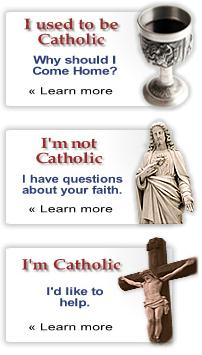
The Catholic church calls them “lapsed Catholics,” a term that Radio Boston host Meghna Chakrabarti used … when talking with representatives of the Boston Archdiocese. The church’s new ad campaign, “Catholics Come Home,” is designed to lure strays back to flock.
On wbur.org, Lynn Annen commented:
I find the term insulting. The Catholic Church might want to refer to me as a “lapsed Catholic”, but I am very happy to call myself an Episcopalian!
Read it all. This is actually a very important issue in coverage of public battles over issues of faith and culture. In my experience, your typical mainstream newsroom contains a flock of former or lapsed or ex-Catholics and this reality tends to play a major role in news coverage of Catholic/social issues.
As you will see in the WBUR discussion, this debate affects millions of Americans — including several members of the U.S. Supreme Court. The real question: What do you call people (including justices) who are no longer practicing the Catholic faith, yet insist they are still Catholic?
The standard answer is that you let the person define themselves. Is that enough in this case, when there are actual facts at stake about membership, facts that are historically determined by the church itself?
|
| Posted at 9:12 am | Print
| Permalink | Trackback |
Comments (31) |


August 5, 2010, at 9:43 am
And they are the ones who (likely) are writing, filtering, and editing stories, as well as writing the headlines and deciding page placement/air-time for many of these stories—and all that has a significant impact on the casual news consumer, who may or may not fully understand their own faith. That’s why GetReligion.org is so valuable. (And that’s why I’m glad dioceses across the country are airing the CatholicsComeHome.org campaign.)
Keep up the great work, all.
Like or Dislike:
0
0
August 5, 2010, at 10:47 am
The last line in the WBUR article is important to the discussion about what terminology to use when writing about “lapsed Catholics”:
And actually, Glinton’s statement is only partly true. Even if you’re an excommunicated Catholic, in the Church’s eyes, you’re still a Catholic. It just happens that you’re a Catholic who can’t receive the sacraments until your excommunication has been removed.
And it is worth noting that the process of formal defection became a bit more stringent in 2006, when the Vatican clarified what it means to formally defect: Among other things, you’ve got to write a letter to your bishop or pastor and get them to agree that you have left the Church. Only then will it be noted in your baptismal record that you have defected.
Perhaps, when it is relevant to a news story whether a person is a Catholic or not, the story should say both whether the person considers himself a Catholic and whether the Catholic Church considers him a Catholic. (Or, even more specifically, whether he or she is a Catholic in good standing — that is, without any sort of ecclesiastical penalty or censure imposed).
There may be some people who claim they are a Catholic in good standing, while the Church claims they are excommunicated and thus not in good standing.
There may be others who claim they are not Catholic, but in the eyes of the Church they still are.
There may be some groups who agree with the bumper-sticker slogan “You can’t be both Catholic and pro-abortion,” while the Church’s official stance essentially says that you can (although perhaps not in a state of grace).
Like or Dislike:
0
0
August 5, 2010, at 10:58 am
How is a reporter to know which US Supreme Court Justices fall into which of the four activity categories of Catholics? Is there some website with a scorecard? Or do several self-sacrificing journalists tail them and compare notes?
Like or Dislike:
0
0
August 5, 2010, at 11:23 am
DAVE:
I’m still looking for the URL on that information, but it is out there.
There was a Washington Post story, if I remember correctly, that literally did the basics on where the justices go to church — or not. The problem is that there has been SO MUCH coverage of the “Catholic Court” — coverage with no real info in it — that the search terms don’t work very well.
Kennedy, for example, is not a church attending Catholic.
Like or Dislike:
0
0
August 5, 2010, at 11:59 am
How do journalists describe Catholics who are not active in all of the sacraments of the Catholic faith?
Easy. Catholic.
Short of a letter from the Vatican or the person’s bishop or priest, the press needn’t parse the state of one’s standing with the Catholic church.
I realize that policing the faithful is a favorite parlor game in certain circles, but I’m not sure anyone wants the media playing along as if they are the religious police in Saudi Arabia. Kennedy is a Catholic until we get official news otherwise. He may not be Tmatt’s version of a Catholic, but that’s of little consequence for journalists who aren’t in the business of deciding who is a good Catholic and who is a bad Catholic. Leave that to the pundits and Catholic Mutaween.
Like or Dislike:
0
0
August 5, 2010, at 12:18 pm
How about calling them ‘non-practising’ Catholics? I believe the Press has abandoned a role when they simply allow people to say “I am a ….”, when there are objective criteria by which one could conclude whether or not the person seriously follows the belief system they profess.
A person calling themselves “Catholic” usually conjures up in the reader’s mind a person who goes to mass on Sunday, etc, etc. By not putting some qualifier on the term “Catholic” the press allows misconceptions about that person to seep into the public consciousness. Also, by informing the public as to the nature of the person’s Catholic faith (or other belief system - religious or not), the public would know to what extent, if any, the public figure’s conscience is informed by the Catholic faith, or by any other faith, creed, or belief system.
Like or Dislike:
0
0
August 5, 2010, at 12:45 pm
In what way? We were just having this conversation on another post, about the press uncritically accepting and reporting a person or organization’s self-identification, and what a problem it can be when that happens.
Now, I don’t really want reporting that follows the pattern of “_______ says he/she is [member of _____ church], but he/she doesn’t do [stuff that members of _____ church are supposed to do], so _____ is obviously not a member of _____ church.” I don’t think that is really helpful for anyone.
It is one thing to, in the course of reporting on an organization, to say that they are not affiliated with, say, the Catholic Church; that is an actual, objective reality. To say, though, that a person is officially affiliated with church but does not live up to the standards of that church is a bit more subjective and probably nearer the edges of journalistic acceptability than I, at least, would like to go.
Like or Dislike:
0
0
August 5, 2010, at 12:56 pm
Terry,
What’s your response to the point from SPG and Jeffrey that the Catholic Church considers those baptized Catholic to be Catholic barring a formal renunciation letter? That would seem to nullify this false choice you’ve set up between letting people self-ID versus letting membership criteria decide.
Like or Dislike:
0
0
August 5, 2010, at 1:05 pm
BEN:
I think it is precisely as useful to journalistic research as saying that there is one “Catholic vote.”
Which to say, Catholic alone is essentially useless. I feel the same way about language for any other religious group when the goal is convey information about the role that religious faith and practice play in public events and life.
Like or Dislike:
0
0
August 5, 2010, at 1:05 pm
I took that as a challenge and did some searching. I found not that story but this one about one particular mass, the “red” mass. I’m not sure what this says about regular church attendance, if anything:
http://www.huffingtonpost.com/2009/10/04/6-supreme-court-justices-_n_309173.html
Like or Dislike:
0
0
August 5, 2010, at 1:06 pm
DON:
Non-practicing Catholics is one of the options. How does that apply to the “cultural Catholic” niche? Not sure about that.
Like or Dislike:
0
0
August 5, 2010, at 1:13 pm
It’s interesting that Democrats and Journalists prefer the “rugged individual” sort of Catholic, who will dare to dissent from church teaching, but they have no use for the “rugged individual” sort of American who will dare to dissent from Liberal Orthodoxy. Very interesting, indeed.
Like or Dislike:
0
0
August 5, 2010, at 2:05 pm
Actually, if one does not consider oneself catholic, it matters not what “The Church” thinks, says, records or otherwise have an official statement on. It is ludicrous to think someone who no longer considers themselves catholic to write a letter so the church can have accurate records. Although it does serve to bolster the numbers of ranks of catholics. I’m with Lynn Annen
Like or Dislike:
0
0
August 5, 2010, at 3:03 pm
Kevin,
The situation that I think is in play here is the case of people who say they are Catholic but do not go to Mass or perform other obligations of the faith. It then becomes a dilemma for the journalist — as Terry sees it — how to represent the person meaningfully to the reader.
At least I think that’s what this whole post is about: an anticipation of future stories on Kennedy as the swing vote in the gay marriage case if/when it hits the Supreme Court. Should journalists identify him as Catholic and leave it at that?
However, this post is pretty cryptic given that we aren’t given any information from Terry about what Kennedy has said about his religious affiliation or practices. Terry does mention in the com-boxes that Kennedy doesn’t go to Mass.
At the level of polling a national vote, statistically significant trends emerge between Mass attendance and political opinions. But in the case of Kennedy, it’s a sample of one — does knowing his Mass attendance habits really give meaningful information as to how he’d decide the case? Ditto, I guess, for just identifying him as Catholic.
Like or Dislike:
0
0
August 5, 2010, at 3:44 pm
Don, over here in the Pagan community we’re trying to get the press to quit referring to us as “self-proclaimed” Pagan or “self-proclaimed” Witch. Please don’t encourge them to extend this practice to Catholics.
Like or Dislike:
0
0
August 5, 2010, at 3:56 pm
“The real question: What do you call people (including justices) who are no longer practicing the Catholic faith, yet insist they are still Catholic?
The standard answer is that you let the person define themselves. Is that enough in this case, when there are actual facts at stake about membership, facts that are historically determined by the church itself?”
If the Catholic Church doesn’t have a problem with these non-practicing Catholics calling themselves Catholics…
and these non-practicing Catholics don’t have a problem calling themselves Catholics,
then why not call them Catholics?
The Church doesn’t care and neither do they. So why should anyone else care?
Like or Dislike:
0
0
August 5, 2010, at 4:20 pm
someone who no longer considers themselves catholic
The problem is that it’s more complicated than that. Apparently, Lynn Annen joined the Episcopal Church and now considers herself an Episcopalian. I’ve had two instances in recent years of persons on their deathbeds calling for a priest, although they hadn’t gone to Mass in decades - in fact, I didn’t know they were Catholic. This is said to be a common occurrence. So while it may be fun to spit on us and claim we are just bolstering our numbers, the fact is that a fair number of people turn to Christ - to His Church - at the last moments. And are received with honest generosity.
Like or Dislike:
0
0
August 5, 2010, at 5:12 pm
Amen, Passing By.
And a point of order: If this conversation is occurring here, imagine the ones taking place in newsrooms. Without an objective, ontological basis for that crazy little thing called Truth, all is fair in love, war, politics and religion. No wonder the media doesn’t get religion. There’s nothing to get anymore—at least within the currents of Western culture of the 21st century.
In terms of this thread, given that a “Who is” question must come after a “What is” answer, and if that “What is” answer is informed by a particular worldview, and if worldviews are up to the individual to construct, then their is no answer to the question of “Who is Catholic,” just as there is no answer to the questions “Who is married,” “Who is a bigot” and “Who is a victim.”
Given such a messy mix of individualized truths, news outlets ought to pay journalists much more than they do to keep it all in order and report it honestly.
Like or Dislike:
0
0
August 5, 2010, at 7:22 pm
How exactly would the fact-checking work on this? Who calls up Kennedy with the “good Catholic” check-list and asks him the battery of questions?
Would reporters carry around these checklists for all faiths and religious groups? Would there be a non-observant Jew list? An Orthodox list? What if someone goes to Mass but not confession? How would that person be classified by the journalists/policemen of the faith?
And if we can’t call people “devout,” why can we call people “non-practicing” or “lapsed.”
Like or Dislike:
0
0
August 5, 2010, at 9:07 pm
How we know that he doesn’t go on Christmas and Easter? Lots and lots of people calling themselves Catholic fit in that category.
There is a spectrum of Catholics with people at all kinds of points along that spectrum. There is nobody at the parish keeping track of who is going to Mass on Sundays.
I’d say that “lapsed” means the person quit making the effort to go to Mass, didn’t join another church and has not particularly rejected the Catholic Church. That person may still agree with the great majority of Catholic beliefs - that describes a lot of people I know.
Why is there this assumption that a practicing Catholic judge will vote differently on a particular matter than a lapsed Catholic, an ex-Catholic or a Protestant or Jew?
Like or Dislike:
0
0
August 5, 2010, at 10:18 pm
JEFFREY:
I have no problem with the word “devout” if it is backed with factual reporting. I oppose empty labels of all kinds.
And, yes, when you are covering different faith groups you learn the questions to ask that help put details and facts into the story of how faith affects life. It’s called journalism.
Like or Dislike:
0
0
August 5, 2010, at 11:24 pm
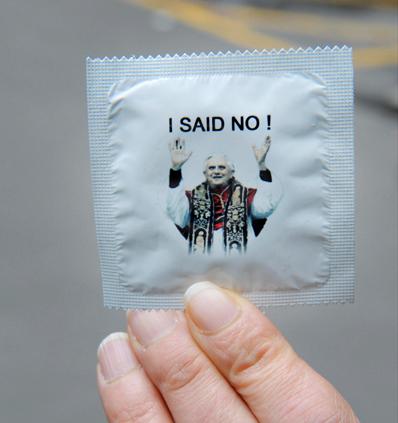
Considering this is a site devoted to honest critique of reporting on religious issues and, presumably, promoting better religious journalism, it seems quite strange that you used the condom wrapper photograph. The article can be reasonably linked to the headline and the headline can be reasonably linked to the photograph, but the article is in no reasonably linked to the photograph. Other than sensationalism, what is the purpose of an unrelated picture that is certain to scandalize a whole bunch of people who care about religion enough to be concerned about how media covers it?
Like or Dislike:
0
0
August 6, 2010, at 11:44 am
DAVID:
Sexuality issues are, in all the polls, a driving force in the exodus from Catholicism. This piece of art came up in Google when I searched for “lapsed Catholic.”
Like or Dislike:
0
0
August 6, 2010, at 1:37 pm
Actually, it must be difficult for journalists to accurately portray the nuances of anyone’s faith, and that is the crux of the problem. Unless the reader themselves is immersed in that faith, or has a good understanding that there are a myriad possible nuances of an individual’s practice of their professed faith, how, short of a 300 word preface to the article, could the reader understand how the professed faith of the individual actually impacts the individual? My earlier suggestion of using the term “non-practising Catholic” in fact probably only makes sense to people who practise some religious faith. So it’s probably not a very helpful term after all.
Perhaps it just comes down to the common sense of the reader. Personally, whenever I see a member of the elite class (politicians, media stars, CEOs and similar) tagged with a particular faith I usually assume they do not adhere particularly strongly to the tenets of that faith, since experience has shown that to be the case amongst that group of individuals. I know that unfairly tars all with the same brush, but it does work well as a coping mechanism when reading the news.
Like or Dislike:
0
0
August 6, 2010, at 8:42 pm
The difference in my book between a “lapsed Catholic” and an “ex-Catholic” is that the former, while not currently an active member of the Church, still considers Catholicism as his/her religious affiliation while the latter do not. Someone who joins a different denomination like Ms. Annen is an ex-Catholic regardless of whether she formally renounced Catholicism to the bishop.
Like or Dislike:
0
0
August 6, 2010, at 10:40 pm
If anybody is still reading - - -
Interesting that the Italian on-line publication Chiesa has an article on who exactly is attending Mass in various parts of Europe.
Here’s an interesting observation:
Read the whole thing called “Who Goes to Mass and Who Doesn’t” here:
http://chiesa.espresso.repubblica.it/articolo/1344389?eng=y
Like or Dislike:
0
0
August 7, 2010, at 4:44 pm
tmatt,
Thanks for the response but I still think the justification is weak. If the story were about why Catholics leave that would be a stronger argument for that photo, but when the question is what do you call someone who identifies as Catholic but does not practice the linkage is tenuous at best. I think we will just have to respectfully disagree on this one.
Like or Dislike:
0
0
August 7, 2010, at 5:38 pm
David, I am atypically with Terry on this one. I found the photo hilarious but I would never purchase one. It probably comes at a premium, and I have no vested interest in giving a poke in the eye to the Pope at the moment I’m contracepting. That is the territory of lapsed Catholics.
Like or Dislike:
0
0
August 8, 2010, at 1:10 pm
A lapsed Catholic wouldn’t have any interest in giving the Pope a poke in the eye. That would be the ex-Catholic with a grudge.
Taking a cue from Jewish lingo, I think I might call the described person a non-practicing Catholic. There are lots of us who pass through that phase a later revert.
This allows for all the reasons a person might quit going to Mass, etc.
“Lapse” has a definite connotation or at least it used to. Think of a person allowing their subscription to Time magazine to lapse. That’s not the angry person who cancelled the subscription. It’s not the person who let the subscription go on purpose because they decided they liked Newsweek better.
Instead, “lapse” describes the person who forgot to re-new, or was just lazy and didn’t get it done, and doesn’t have the motivation to go to the trouble of getting it started up again. The person may still enjoy picking up the magazine now and then or read it at the dentist’s office.
Like or Dislike:
0
0
August 8, 2010, at 1:27 pm
Another way at looking at this from a recent study in Sicily. Two hundred volunteers in a particular diocese counted everybody who actually went to Mass and those at home sick who received communion. The results were compared to a recent survey of Catholics.
It’s complicated. I don’t think you can predict Justice Kennedy’s judicial votes based on perceived Mass attendance.
Source: http://chiesa.espresso.repubblica.it/articolo/1344389?eng=y
Like or Dislike:
0
0
August 8, 2010, at 2:51 pm
A few points that may surprise more than a few journalists assigned to the Holy Father:
In his dialogue with Marcello Pera (Without Roots. The West, Relativism, Christianity, Islam (trans. Michael F. Moore, New York: Basic Books, 2006)), Ratzinger, ever the pastor, notes
Also in that work, Ratzinger writes
Australian theologian Tracey Rowland notes in her book Ratzinger’s Faith: The Theology of Benedict XVI (New York: Oxford University Press, 2008) that Joseph Ratzinger/Benedict XVI
This pope is not the one-dimensional thinker that so many (lazy?, frantic? agenda-drive?) journalists and bloggers often depict him, nor are they accurate in the way they filter his words and action. But sadly, the casual reader of AP and NYT (etc.) stories are not presented with his depth of thought—and, yes, his love for all people.
Like or Dislike:
0
0