
GetReligion.org - GetReligion » “The press . . . just doesn’t get religion.” — William Schneider
member of beliefnet's blogheaven

Recent Posts

Old Catholics vs. the pope | Didn’t CNN fact check the holy popsicles? | Slow-pitch screamer on the Godbeat | In the end, Summer worked hard for her Lord | Same-sex marriage, celebration and “core values” | Has Time printed the worst Anglican article ever? | That Gray Lady Catholic same-sex unions scoop 2.0 | Gay marriage and the French Catholic vote | Pacquiao, homosexuality, tolerance and reading comprehension | Bishops threaten lawsuit over HHS mandate | 2012 Archive >


Wednesday, June 9, 2010
Posted by Mollie
Share

The story of a Catholic woman religious who was disciplined for authorizing an abortion has been percolating for a few weeks. It’s a very sad story and my heart goes out to all involved.

The basic story is that a woman had had pulmonary hypertension, a condition that, in pregnancy, put her at high risk of eclampsia. Doctors at the Catholic hospital treating the pregnant woman said she would likely have to abort her child in order to live. The hospital’s ethics board met and approved the abortion. Sister Margaret Mary McBride, the hospital’s vice president of mission integration, was a member of the committee that made the decision She has since been assigned new duties and Phoenix Bishop Thomas Olmsted put out notice that Catholics who formally cooperated in the abortion were automatically excommunicated.

Unfortunately, the reporting on this story has — surprise — been a bit deficient. It has been hard to get precise details on the diagnosis, the justification given for the abortion and the response of the bishop — much less any good discussion of the Catholic teaching on key matters.

I do know that the church believes that it is never right to kill an innocent person (even if that person is an unborn human being) in order to save the life of another person. If you want an easy-to-read and interesting defense of the Phoenix bishop’s decision, head on over to First Things for this piece by (The Anchoress) Elizabeth Scalia. For a different perspective disagreeing with the bishop’s decision, you can head over to First Things for Michael Liccione’s piece arguing that the principle of “double effect” should have been considered.

And if you want an article that assumes its own premise, fails to engage in any debate, ignores the ethical reasoning behind the bishop’s statement, neglects to find contextual comments for the same and paints the sister as a martyr hero, definitely check out this ABC News article by Dan Harris and Claudia Morales:

In the end, [Sister Mary] McBride chose to save the young woman’s life by agreeing to authorize an emergency abortion, a decision that has now forced her out of a job and the Catholic Church.

Despite being described as “saintly,” “courageous,” and the “moral conscience” of the Catholic hospital, McBride was excommunicated from the Catholic Church by Phoenix Bishop Thomas J. Olmsted for supporting the abortion. …

Although many medical ethicists say it was the right decision, the hospital confirmed McBride has been removed from her position as senior administrator and reassigned.

Critics are arguing McBride’s punishment is a double standard. Many are pointing out that it has often taken years for priests who sexually abuse children to be even reprimanded, let alone excommunicated.

That line about medical ethicists, which I don’t even understand since it includes precisely zero evidence, shows that this article is really more about pushing an agenda than providing any actual insight into the church’s decision. Bringing up the pedophilia angle is certainly valid, but it’s done so inartfully as to be silly.

So, is there a reason for the different standard? What is it? We never find out since the only canon lawyer quoted in the piece, Father Thomas Doyle, doesn’t address the topic.

And I’m all for quoting Father Thomas Doyle, but he’s not exactly an impartial observer. Not that anyone is. But Doyle is an outspoken critic of church hierarchy and has, in fact, gotten into a bit of trouble with his superiors because of it. This story isn’t lacking perspective from people who oppose what the Phoenix bishop did — it needs people defending or at least explaining his decree.

Instead we get lines like this one, which ended the article:

For a devout woman who spent years dedicated to her religion, serving the poor, the sick and the needy, McBride is paying the ultimate sacrifice for her decision to help another life; she is no longer allowed to receive the sacraments.

I’m sure that it made the reporters feel good to write that. But it really does a disservice to Catholic teaching and to providing readers with an understanding of the key ethical issues being considered.

Cathy Grossman at USA Today has an article that advances the story, looking at how Catholic standards of care affect more than just women with pulmonary hypertension. Her article begins this way:

The case of an abortion at a Catholic hospital in Phoenix prompted an angry bishop to rebuke the Sister of Mercy who allowed the surgery to save the mother’s life.

So how does she know that the bishop was angry? Did he say that in his notice of excommunication? What if he wasn’t angry at all? What if he was sad or heartbroken or disappointed? I’m just curious how we know he’s “angry.”

This story gets major points for including a discussion of Catholic principles in question. For instance:

In the Phoenix case, physicians concluded that only removing the placenta could save the woman dying from pulmonary hypertension.

Sister Margaret Mary McBride, whose job was to represent Catholic teachings, concurred that the lifesaving surgery was morally acceptable. (She has since been moved to a different position at the hospital.)

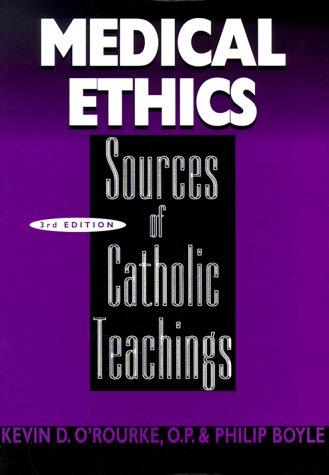
O’Rourke says McBride was relying on the accepted “principle of double-effect,” in which the intention is not to kill the fetus but is a sad, secondary effect of an essential treatment. The Diocese of Phoenix’s statements show “they are not well-schooled in bioethics,” O’Rourke says.

I am in no way taking a position on Catholic teaching here, but it would be nice if we could also get a mention that other moral theologians say the principle of double effect doesn’t count in this case. They would say that double effect never permits the doing of evil in order to achieve good (otherwise, for example, you could use that principle to torture enemy combatants for the purpose of obtaining information). And they would say that double effect can only apply for an indirect abortion.

Obviously, I am not a canon lawyer, but my understanding is that sometimes medical treatment is done to save the life of the mother that also might run the risk of causing an abortion. That’s considered an indirect abortion and a different ethical situation than actually prescribing an abortion to save the life of the mother.

The story explains how Catholic hospitals have a right to provide care without violating Catholic teachings and how patients have the right to seek out any care that they seek. People from various sides provide helpful quotes and it’s a really good way to advance the Phoenix story so that readers are forced to consider deeper issues.

In this and other coverage, it might be nice to see more awareness of the relationship between religion and hospitals. At least since the 4th Century Council of Nicaea, Christians have been building hospitals and the history of hospital care in America is one where Catholics, Jews, Seventh-Day Adventists, Lutherans and other religious adherents are key players. The growth and regulation of the medical industry is a big story. How it affects religious groups remains an interesting and important one.

Page Icon Posted at 4:54 pm | Print Print | Permalink | Trackback | Comments (19)
divider

19 Responses to “Catholic canon fodder”

  1. Gregory says:

    Some more reporting would definitely be helpful. For example, doesn’t the Code of Canon Law automatically excommunicate those who procure abortions? As such, the local bishop did not excommunicate McBride, but rather stated that which the law requires. If any bishop excommunicated her, it is the Bishop of Rome, not the Bishop of Phoenix.

    Like or Dislike: Thumb up 0 Thumb down 0

  2. liberty says:

    McBride was excommunicated from the Catholic Church by Phoenix Bishop Thomas J. Olmsted

    Right there they lost me. Because I know that the Bishop did not excommunicate her. She was automatically excommunicated due to her actions - the Bishop just informed her of that fact.

    This isn’t particularly difficult to get right - even Wikipedia explains Latae Sententia excommunications!

    I get that the whole Catholic Canon Law thing is not normally something that journalists think much about. However, when writing about issues such as this would it be really that hard to look up the basics? The Vatican has both the Catechism and the Code of Canon Law online and as I said before even some Wikipedia research might have saved the writer from making a basic mistake.

    Like or Dislike: Thumb up 0 Thumb down 0

  3. Raymond Takashi Swenson says:

    Maybe I am being a little obtuse, but it seems to me that, if the mother dies because her medical condition is left untreated, then the child will likely die, too. The choice then is not between preserving the life of a mother or of the child, but between preserving the life of the mother, or letting both mother and child die.

    If indeed the facts were that the choice was between taking the life of the mother or the life of the child, what is it about Catholic doctrine that requires that the child be favored over the mother? It seems to me that, even if we rate the potential pain and suffering of mother and child as equal, the suffering of OTHER people is likely to be greater from the death of the mother. There is presumably a husband involved, who would be losing a spouse, other children who need the care of their mother, and other relatives of the mother who would be grieving over her loss.

    I have not heard of Catholics being automatically excommunicated when they make difficult decisions between saving only one of two living adults, or of taking the life of one adult in order to save the life or health of another one (for example, the life of an attacker or rapist versus the life of his target). Why such a Procrustean, inflexible rule in the case of unborn children?

    Like or Dislike: Thumb up 0 Thumb down 0

  4. Mollie says:

    Raymond,

    What does your comment have to do with journalism?

    Like or Dislike: Thumb up 0 Thumb down 0

  5. Raymond Takashi Swenson says:

    Mollie: My questions are, I think, obvious ones that many readers would have, but which were not addressed in the stories. Is there some particular value in having stories about religious topics that raise but do not address such questions? Balanced journalism would allow voices in defense of Catholic policies to explain the rationale for the policies and the ways they are implemented. It is not, in general, fair to the Catholic church to have such questions created by the circumstances in a story but not in some way addressed, even if it is no more than a link to a longer explanation.

    Like or Dislike: Thumb up 0 Thumb down 0

  6. Mollie says:

    Raymond,

    I agree completely that these stories leave big gaping holes. For instance, it should be shared that the Catholic Church would teach that it’s better to risk possible death rather than actively take a life. They view the life of the unborn child and the life of the woman carrying that child as equivalent — that’s also key information. They don’t, as some in our culture might, view it as a life versus a potential life or a life with more value versus a life with less value. All of these things should be explained.

    I’m not Catholic — I only learned some of these issues while researching for this post.

    Basic fairness is always important when covering heated topics such as this, but particularly if you’re going to move from straight news to advocacy pieces, as the ABC one above did.

    Like or Dislike: Thumb up 0 Thumb down 0

  7. Peggy says:

    I agree w/the other commenters that once the article mis-stated how Sr. became “excommunicated,” I am lost to the writer. Also, I wonder how it is that the “bio-ethical” committee of a Catholic hospital doesn’t seem to understand clearly that a direct abortion of a baby is never moral. Period. End of story. If some other surgery were performed on the mother and it could have the effect of killing the child, but it was not a deliberate, direct murder of the child, then that is what the double-effect is about I understand. The procedure undertaken has been described as an abortion. The doctors have made no bones about it. Why are such unashamed doctors practicing at a Catholic hospital? It would be nice if a media article would examine why disobedience and dissent are occurring at a Catholic institution rather than look upon the big bad hierarchy as stifling creativity and what-have-you.

    Like or Dislike: Thumb up 0 Thumb down 0

  8. Passing By says:

    Thank you for posting this. I really don’t have any comment on the journalism, but it’s a serious, complex topic, worth considering.

    Like or Dislike: Thumb up 0 Thumb down 0

  9. Julia says:

    This is a big subject that goes way beyond abortion.

    The double-effect issue is illustrated by the removal of an ectopic pregnancy - where the fertilized egg attaches in the Fallopian tube instead of traveling down to the uterus. It’s a growth in an unnatural location that is going to burst and kill the mother. Removal of the bulging Fallopian tube results in the death of the growing fetus that is attached inside of it.

    I’ve seen it stated in many news articles that a Catholic woman with an ectopic pregnancy isn’t allowed to have it removed. That’s baloney. I worked in a Catholic medical school hospital back in the 1960s and was responsible for making and staining slides of tissue removed in surgery for the pathologist to read. Everybody was Catholic. Some of the materials for the slides were given the medical description of “products of conception.” Some were from miscarriages (aka spontaneous abortions), but a few were from ectopic pregnancies. I asked and got a detailed explanation of the principal of “double effect”.

    Anyway, there is current debate about bio-ethics ion Catholic circles and it’s only going to get worse when money for heroic medical care for the elderly gets scarcer.

    Like or Dislike: Thumb up 0 Thumb down 0

  10. dalea says:

    What puzzles me is the fact that a committee made the decision and the story focuses on the sister. She did not decide this on her own. It may have been put to a vote and she lost, or a rough consensus with dissent. Additionally, the deliberations of the committee are legally kept secret to protect patient privacy. As are patient records. There is a lot in this story that should have been kept private. But not enough information to really understand the situation. What I am really curious about is how the bishop even learned of this. The records of this procedure are required to be kept from outsiders.

    The proceedings of bio-ethics committees are rarely ever discussed. The committee meets and makes decisions. How and why they decide as they do is never made public. Everyone on the committee is bound by conscience and professional standards. Doctors, nurses, EMT techs, computer techs, social workers and lay people can be on these boards. I found the support from bio-ethicists to really helpful in understanding the situation. It means that the decision was in accord with the standards and norms of medical professions and standard practice.

    So, I find this story has just enough information to confuse the situation but not enough to explain the decision path.

    Like or Dislike: Thumb up 0 Thumb down 0

  11. dalea says:

    Peggy asks:

    Why are such unashamed doctors practicing at a Catholic hospital?

    Doctors are not usually employees of the hospital. There are some admitted to practicing at the hospital but there can not be a religious test for this. And in some fields, doctors are from a registry. Which is sort of like a temporary agency for doctors. Emergency room doctors are frequently working this way. The same is true of nurses.

    An emerging method is for pathology and related fields to be done over the internet. The doctor who reads your xrays can be in Prague or Delhi or Melbourne.

    The press has not kept up on how hospitals function.

    Like or Dislike: Thumb up 0 Thumb down 0

  12. Ray Ingles says:

    Cathy Grossman’s story helps, but it also makes me wonder.

    The trouble comes when there’s no time to move or no willing provider within hundreds of miles. Then, Cahill says, “it really comes down to an interpretation of the morality of the treatment or procedure, not only based on medical issues but the full humanity of those involved.”

    What if you have a mother who can’t be moved, and isn’t willing to die for her unborn child? Whose decision counts more then?

    Like or Dislike: Thumb up 0 Thumb down 0

  13. Peggy says:

    dalea,

    Yes, you’re right. I’ve seen it via hospital bills. Separate ones from doctor, x-ray tech, hospital overhead, etc. But the hospital could say to doctors, you can’t do that at our hospital or, if you do that anywhere you can’t serve at our hospital. [Not sure of the legality of the latter condition frankly.] The doctors quoted had no understanding or regard for Catholic bio-ethics.

    And the only condition I’ve heard of where a pregnancy would indeed kill a mother is an ectopic pregnancy. The child dies by indirect effect. It is not aborted. The mother is treated, sadly the child dies.

    Like or Dislike: Thumb up 0 Thumb down 0

  14. dalea says:

    What is not being explained here is that the standards of the RC are not the only standards involved. Nor is it clear what the time line is. One fact that would be important is to know if this was a regular meeting of the bio-ethics committee or an emergency meeting. How did the patient arrive at the hospital, on her own or in an ambulance? What did the social workers determine were the facts about the patient’s life situation? What did the surgeon decide? (In actual hospital practice, no one can overrule a surgeon.) What did the nurses say about the case? And what puzzles me, why did a Catholic hospital have the supplies for abortion on hand?

    The only way I can see for the story to be fully explained is for the woman to come forward, tell her side of it and allow the records to be made public. Until then, we are wandering in the dark.

    Like or Dislike: Thumb up 0 Thumb down 0

  15. Ray Ingles says:

    But the hospital could say to doctors, you can’t do that at our hospital…

    A urologist I know of at a local Catholic hospital rents space elsewhere to perform vasectomies, as permanent contraception like that isn’t allowed at the facility itself.

    And the only condition I’ve heard of where a pregnancy would indeed kill a mother is an ectopic pregnancy.

    Well, the articles we’re discussing mention another case - pulmonary hypertension leading to eclampsia. Eclampsia can very definitely be fatal. It isn’t always, of course… but technically a woman can survive an ectopic pregnancy if they’re very lucky, too.

    Like or Dislike: Thumb up 0 Thumb down 0

  16. dalea says:

    My point above is that journalists who view the situation as following the RC position on abortion are drastically simplifieing a very complicated set of relationships. Just trying to understand all the relationships and criteria involved is really tricky. And in a 600 word story, can not be done.

    Like or Dislike: Thumb up 0 Thumb down 0

  17. Nancy Reyes MD says:

    “The basic story is that a woman had had pulmonary hypertension, a condition that, in pregnancy, put her at high risk of eclampsia. Doctors at the Catholic hospital treating the pregnant woman said she would likely have to abort her child in order to live.” says the article.

    Not mentioned: Eclampsia by definition is in later pregnancy, usually after 28 weeks when the baby would be viable.

    As a doc, one could refer the lady to another hospital for a second opinion that could do the abortion or offer her care to carry the baby to 28 weeks and have a good nursery where it would have a chance of life.

    But it sounds like the medical problem would be lifethreatening in the third trimester, not at 11 weeks.

    So theoretically you could induce a delivery at 28 weeks and have a live baby.

    Catholics allow medical treatment to save the life of the mother (e.g. chemotherapy, radiation, or surgery of a cancerous womb) if there is no alternative to save the mom’s life and you can’t wait a few months until the baby is old enough to survive, even though the treatment might kill the baby.

    They also allow inducing labor when carrying the pregnancy to term would endager mom’s life (e.g. heart problems, eclampsia, etc).

    They don’t allow “elective” abortions to save a life that theoretically might be endangered at a time when the baby is viable.

    As for ectopic pregnancies: The kid has no chance to survive, but will kill mom. However, there is a moral question about using methotrexate in these cases.

    Like or Dislike: Thumb up 0 Thumb down 0

  18. Maureen says:

    St. Fabiola (previously regarded by St. Jerome’s circle of devout Christian ladies as the airhead of the bunch) founded the first-known charity hospital and paid for it out of her own money, also working in it with her own hands. (About which, St. Jerome candidly says that she’s a lot more toughminded than him.) The hospital is still around in Rome, as I recall.

    Like or Dislike: Thumb up 0 Thumb down 0

  19. Bern says:

    According to RC teaching the woman should have refused the abortion and (maybe? probably?) died along with her unborn child. I think these letters sum it up: http://www.nytimes.com/2010/05/29/opinion/l29kristof.html

    Along with a quote from the bishop himself, the USA Today story should included something on how the case came to his attention. My guess would be a member of the ethics committee who disagreed with the decision informed the bishop’s office. He then chose to make the case public, months later, in his role as teacher of the faithful. Very good: but aren’t hospital and patient records are supposed to be private under federal HIPAA law?

    Like or Dislike: Thumb up 0 Thumb down 0