
 Every now and then, one of your GetReligionistas reads a story -- usually about a controversy tied to culture and morality -- and then says, in his or her heart of hearts, "You know, religion ought to be in here somewhere."
We think we sense the presence of a religion ghost and, of course, chasing those ghosts is what this weblog is all about.
Every now and then, one of your GetReligionistas reads a story -- usually about a controversy tied to culture and morality -- and then says, in his or her heart of hearts, "You know, religion ought to be in here somewhere."
We think we sense the presence of a religion ghost and, of course, chasing those ghosts is what this weblog is all about.
So we write out post and then, on the comments pages, someone will say, "Why is this a GetReligion issue? There's no religion in this story."
And we say, "Well, there should be."
And the reader then says, "Well, the story also doesn't mention iced tea, moon rocks, polkas or the shocking rise in teens wearing flip-flops when it's 35 degrees, and it could have (or similar arguments). In other words, the reader is asking: What does religion have to do with this kind of argument about culture and morality (and, often, sexuality)? What's faith got to do with it?
We then say that, statistically speaking, we are dealing with subjects that tend to be linked to religious beliefs and traditions here in America. And so forth and so on.
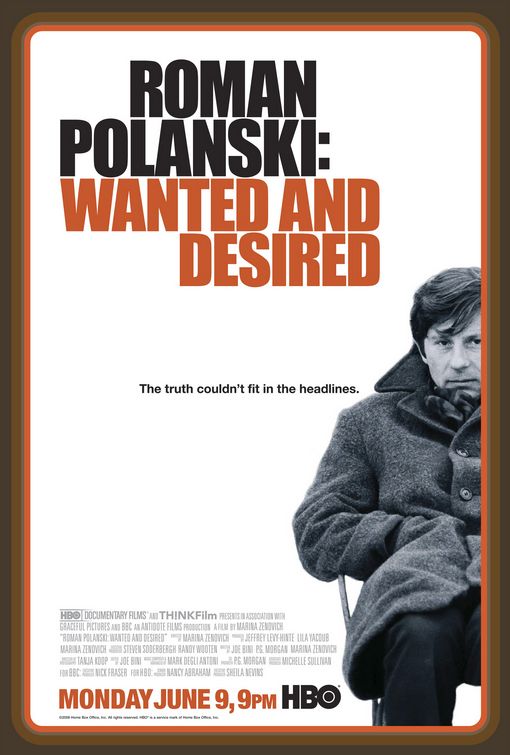
So you have been warned: Here comes another GetReligion post about the Roman Polanski case. I think I saw a ghost in that stunning Los Angeles Times feature the other day by Joe Mozingo about the shocking contents of the original testimony by the victim, Samantha Gailey. The double-decker headline read:
How a girl's stark words got lost in the Polanski spectacle
Samantha Gailey, at 13, was unequivocal in her testimony against Polanski. But her account was turned into something almost benign.
It's a long, long story and, at times, almost impossible to read. You know you are in rough territory when a young girl tries to describe an explicit act of oral sex as "cuddliness." All of the details are here, in large part because the story is trying to make the case that -- for a variety of cultural reasons -- people in Hollywood and elsewhere had motivations for making the blunt details go away.
So what did one of the world's most respected movie directors -- at least in high, elite circles -- plead guilty to doing, kind of, before later trying to say that he didn't really do what he was accused of doing, or it wasn't really that bad because, yada, yada?
Along the way, various people would scrub the core allegations into something more benign -- a probation officer would deem the crime a "spontaneous" act of "poor judgment," a prison psychiatrist would call it "playful mutual eroticism."
But Samantha's stark testimony has never been seriously impugned, in or out of court. When she sued Polanski years later for sexual assault, he pleaded the 5th when asked if he illegally gave her champagne and part of a quaalude pill, then performed oral copulation on her and sodomized her.
An extensive review of several thousand court documents, as well as numerous interviews, shows a basic dynamic defining the entire saga -- one force trying to drive debate away from a young girl's unshaken allegations, and another trying to reel it back in.
So where is the ghost? Well, what are these two forces in this tug-of-war? Or what are the forces that helped shape the moral visions of the groups on both sides of this debate about Polanski and his history of seducing young girls?
After all, as Mozingo notes much later in the story, the European media could not understand what was going on. What about the private life of this young American siren who was causing trouble for this great artist?
The European media ... went to Samantha's school and house, talked to her friends, trying to learn more about the girl whose allegations threatened to bring down a veritable cult figure in Europe, where Polanski was not-so-secretly dating a 15-year-old girl, Nastassja Kinski, with no public outcry, no arrest. Samantha was cast as the temptress.
 So, finally, we get to the passage in which I sensed the presence of a ghost, a passage worth sharing with GetReligion readers.
At a crucial moment, Polanski's fate depended, in large part, on the recommendations of a probation officer named Irwin Gold. Would this case evolve into a mere public relations fiasco or would people, responding to Samantha's stark testimony, keep talking about -- gasp -- jail?
The victim's testimony kept getting "scrubbed" clean of the nasty details in report after report. Finally, Gold openly wrote about his admiration for Polanski and the degree to which the director had risen above the great tragedies in his life. And, of course, Polanski was a living symbol of Hollywood and its culture.
Gold wrote:
"Possibly not since Renaissance Italy has there been such a gathering of creative minds in one locale as there has been in Los Angeles County during the past half century. ... While enriching the community with their presence, they have brought with them the manners and mores of their native lands which in rare instances have been at variance with those of their adoptive land."
And there you have the two forces that keep colliding in the Polanski case.
Now, if you look at history and if you look at the statistics that define American life, would you say that religion plays a rather important role in defining the "manners and mores" of the "native land" that keeps causing grief for many elite artists in Hollywood? In terms of facts and statistics, what are some the most stark differences between Europe and America, when you are dealing with questions of morality and public life?
Just asking.