
GetReligion.org - GetReligion » “The press . . . just doesn’t get religion.” — William Schneider
member of beliefnet's blogheaven

Recent Posts

Bishops threaten lawsuit over HHS mandate | 5Q+1: How Kate Shellnutt’s technophilia meshes with religion | New York Times scoop! Catholic same-sex unions! | Ghost at Catholic girls school | About that nuns on the Internet story | Hey media: people’s ‘pinterests’ are fading | Mitt Romney addresses “people of different faiths” | Covering the same-sex marriage effect on voters | How many reporters need to cover one story? | Pod people: Colorado Presbys and abuse in Ireland | 2012 Archive >


Monday, November 19, 2007
Posted by Mark Stricherz
Share

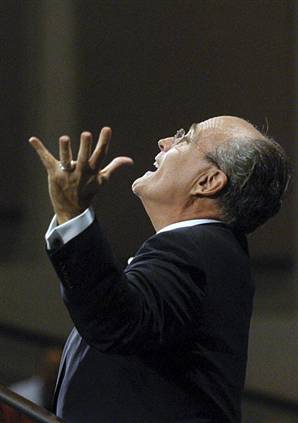
rudy

At the risk of not offending GR readers and generating few comments from said group, I offer a qualified endorsement of two stories about Rudy Giuliani’s Catholicism. A recent cover story in The New Republic linked Giuliani’s political outlook to his education in Catholic social teaching. Meanwhile, the latest Newsweek reports that Giuliani’s pro-choice stand will continue to draw outspoken opposition from traditional Catholics. While neither story offers sufficient perspective, each grasps an important truth about Giuliani: his Catholic upbringing continues to define him.

John Judis of The New Republic wrote the more intriguing of the two stories. Part of his thesis is that Giulianis’ lifelong efforts to combat crime and disorder with his Catholic education:

There are two aspects of Catholic philosophy that show up clearly in Giuliani’s political outlook. The first, which he would have found at almost any religious school, is a tendency to view politics and history as a moral contest between good and evil. That is sharply in contrast to a secular post-Enlightenment view of individuals—from presidents to petty thieves—as products of historical forces greater than themselves. The difference between Giuliani’s view and the secular one would show up in his attitude toward crime and criminals.

Second, Giuliani was exposed to a specifically Catholic (as opposed to Protestant-individualist) view of the relationship between authority and liberty—one that dates from Aquinas’s Christian Aristotelianism, was spelled out in Pope Leo XIII’s Encyclical on the Nature of Human Liberty, and still enjoys currency today, even in the wake of Vatican II. Catholic thinkers do not see liberty as an end in itself, but as a means-a “natural endowment”—by which to achieve the common good. For that to happen, individuals have to be encouraged to use their liberty well; and that is where authority comes into play. Authority, embodied by law and the state, encourages—at times, forces—free individuals to contribute to the common good. Or, to put it in Aristotelian terms:Authority—by creating a just order—encourages liberty over license.

Judis’ point is well taken. It’s no accident that while mayor of New York that Giuliani cut crime and disorder. His Catholic schooling paved the way for his interest in the topic. Just think of his mayoral predecessors: Abe Beame, Ed Koch, and David Dinkins. None of them were educated at a Catholic high school and college as Giuliani was.

If Judis were an expert in Catholicism, he might have teased out how Giuliani was educated not just in Catholic philosophy but that of the Christian Brothers; Giuliani attended Bishop Loughlin in Brooklyn and Manhattan College, both of which are Lasallian schools. (“St. John Baptiste De La Salle, pray for us! In our hearts forever!”). The Christian Brothers’ charism is aimed more at educating the working and middle classes, as opposed to the professional classes that the Jesuits aim to teach. But that’s asking a bit much of any writer.

My main criticism of Judis’ story, which is one I have of every story about Giuliani, is its failure to explore why Giuliani switched in 1989 from pro-life to pro-choice. While Judis notes that Giuliani changed his views in order to win the endorsement of the Liberal Party, this begs some serious questions. Did Giuliani believe he was making a pact with the devil? Or did he consider abortion a fringe issue?

While some readers will no doubt wonder why these questions should be asked in the first place, Newsweek ran an interesting story about the consequences of Giuliani’s pro-choice position:

Rudy’s Catholic problem is this: he is pro-choice, and 63 percent of white Catholics who go to mass weekly are not. This is a small activist group, yet they are determined, it seems, to see the former mayor fail. Before the Iowa straw poll in August, Fidelis — a Chicago-based conservative Catholic group — ran anti-Giuliani ads in Iowa pointing to the candidate’s longstanding pro-choice record.

… Now the U.S. Catholic bishops are raising their voices against Giuliani as well. Last week a number of activist bishops told Newsweek they would deny Giuliani communion for his views on abortion—if, after counseling, he continued to hold them. Their rhetoric emphasized human rights and first principles: almost every bishop interviewed by Newsweek called abortion an “intrinsic evil.”

Newsweek reporters Lisa Miller and Jessica Ramirez not only get religion, but they also broke ground in doing so. No other journalists have noted that Giuliani’s support for abortion rights has already drawn and will draw vigorous opposition from traditional Catholic leaders and activists.

The main weakness of their story is one of context. Like seemingly every story about religion and politics nowadays, it cites Pew for the statistic that Catholics have been moving right since 1992. Try 1972, when Richard Nixon became the first Republican to carry the Catholic vote since Calvin Coolidge. While some GR readers may protest that I am nitpicking here, I am not at all.

In any event, these two stories are to be praised, not condemned.

Page Icon Posted at 4:28 pm | Print Print | Permalink | Trackback | Comments (16)
divider

16 Responses to “Getting Rudy’s Catholicism right (well, mostly)”

  1. Jerry says:

    I don’t dispute the majority of your these nor your religious point but I will pick one nit: the one about Giuliani’s crime statistics. The fact that crime went down while he was mayor is not in dispute. The effect he personally had on that decrease is another question. Google turned up many sources on that question. http://onlinejournal.com/artman/publish/article_2030.shtml is one example.

    Authority, embodied by law and the state, encourages—at times, forces—free individuals to contribute to the common good.

    Friends of mine on the left see that characterization as very accurate and are very troubled by that authoritarian side of Giuliani’s nature.

    Like or Dislike: Thumb up 0 Thumb down 0

  2. Brian Walden says:

    Now the U.S. Catholic bishops are raising their voices against Giuliani as well. Last week a number of activist bishops told NEWSWEEK they would deny Giuliani communion for his views on abortion—if, after counseling, he continued to hold them. Their rhetoric emphasized human rights and first principles: almost every bishop interviewed by NEWSWEEK called abortion an “intrinsic evil.”

    While the Newsweek article may be good overall, as I Catholic I can’t say that this is paragraph which Mark quoted is a good one. Bishops who say that they would withhold communion from Giuliani if after counseling he continued to hold his views on abortion are not activist Bishops. That’s what Canon law requires of them:

    Can. 915 Those upon whom the penalty of excommunication or interdict has been imposed or declared, and others who obstinately persist in manifest grave sin, are not to be admitted to holy communion. (emphasis mine)

    Also, the writers seem to think that abortion being an “intrinsic evil” is just an opinion of some bishops when in fact it is an official teaching of the Church. There are no circumstances where direct abortion is moral.

    Like or Dislike: Thumb up 0 Thumb down 0

  3. Brian V says:

    I don’t remember hearing anything from Michael Dukakis’ Orthodox bishop regarding Dukakis’ position on abortion during his presidential campaign. Nor did I hear any other Orthodox bishop address this. On that note, did the Orthodox have anything to say about Spiro Agnew’s liberalization of abortion laws in Maryland before becoming Vice President? Were things so different then, or this another example of the Orthodox flying under the radar on the religion beat? Do Orthodox bishops have nothing to say on the matter?

    Like or Dislike: Thumb up 0 Thumb down 0

  4. Mark Stricherz says:

    Brian Walden makes two good points about the Newsweek article. I should have mentioned both of them.

    Like or Dislike: Thumb up 0 Thumb down 0

  5. Lisa says:

    Quote: “Did Giuliani believe he was making a pact with the devil? Or did he consider abortion a fringe issue?”

    Maybe he just honestly changed his mind. Abortion rights reduce the pointless deaths of women, and therefore show a social conscience.

    And no, fetuses are not people. I love most of the observations in this blog, but I’m getting weary of the pro-life bias. I’m Christian and I do not agree. If the aim of this blog is to critique the press and religion coverage, yet maintain some detachment, I don’t understand why the “abortion is a sin” belief keeps popping up. This is getting to be like reading the front page of the NY Times…you’re guaranteed their opinion will infuse every (theoretically objective) news story.

    Like or Dislike: Thumb up 0 Thumb down 0

  6. Elias Graham Reeves says:

    I don’t remember hearing anything from Michael Dukakis’ Orthodox bishop regarding Dukakis’ position on abortion during his presidential campaign. Nor did I hear any other Orthodox bishop address this. On that note, did the Orthodox have anything to say about Spiro Agnew’s liberalization of abortion laws in Maryland before becoming Vice President? Were things so different then, or this another example of the Orthodox flying under the radar on the religion beat? Do Orthodox bishops have nothing to say on the matter?

    If I recall correctly, Agnew was an Episcopalian. As far as Greek Orthodox bishops and Dukakis, I think the atitude was that they were thankful that one of theirs was making it. Archbishop Iakovos called him “a son of the church,” even though several Orthodox had pointed out that he had excommunicated himself by marrying a non-Christian and supporting abortion rights.

    Like or Dislike: Thumb up 0 Thumb down 0

  7. Laura says:

    You know what I’m tired of, though I don’t expect it to go away. I’m tired of Catholics who are just trying to follow church teaching being labeled as Traditional. We’re not traditional, we’re just following what the Church teaches. To use the words Conservative or progressive to describe certain Catholics puts a destinction between them that shouldn’t be there. It makes it seem as if following the teachings of the Church is optional.

    Like or Dislike: Thumb up 0 Thumb down 0

  8. Joe says:

    Lisa,
    In your opinion, what is the difference between a fetus and a newborn baby? Is one not infused with a soul? or not able to rationalize? or not able to walk, or not able to feed itself? I’m curious, at what age do you think a fetus/baby/child becomes a person? And what are your criteria?
    Thanks.

    Like or Dislike: Thumb up 0 Thumb down 0

  9. Torin says:

    Giuliani is like most Catholics I know. They go to church for social networking and to make them feel better about the way the live their life. Just like the majority of Christians.

    Like or Dislike: Thumb up 0 Thumb down 0

  10. Brian Walden says:

    I agree with you, Torin, but I think that’s why these articles are interesting. They show how sticky Catholicism is. From what I’ve heard about his beliefs and participation in the sacraments Rudy seems to be at best nominally Catholic, yet the John Judis article describes how certain elements of Catholicism have shaped his worldview.

    Like or Dislike: Thumb up 0 Thumb down 0

  11. Peggy says:

    I don’t find it all that earth shattering that a person’s formation and education throughout childhood and early adulthood would have some impact on his adult values and way of life. The problem is that Rudy has chosen to accept only some parts of the Catholic faith and morals. Is John Judis trying to impress us by showing Rudy to have absorbed some aspect of Catholic theories and uses it in his professional life? Whoopdie-doo. I guess journalists are hard pressed to find something of value in Guiliani’s practice of his faith. Guiliani is not too different from other “spirit of V2” folks. Why is this interesting or a surprise?

    Like or Dislike: Thumb up 0 Thumb down 0

  12. Brian V says:

    Elias:

    You are, of course, correct about Mr. Agnew. I should have dug a little deeper. (Insert your own joke here about Episcopalianism and social climbing.) And thank you for the insight on Mr. Dukakis and his church.

    Like or Dislike: Thumb up 0 Thumb down 0

  13. str1977 says:

    Regarding Giuliani’s switch, I think it is a combination of thinking it a “not so important” issue combined with the slippery slope of being “morally opposed” but wanting to maintain the legality of abortion.

    I think the articles are overall good but I have one bone to pick:

    a tendency to view politics and history as a moral contest between good and evil. That is sharply in contrast to a secular post-Enlightenment view of individuals—from presidents to petty thieves—as products of historical forces greater than themselves.

    That’s just nonsense. Catholics do not, per se, see politics and history as a fight between good and evil. Of course, such forces are at work but that’s not all of history and politics. Unless, the writer wants to say that Catholics do think that there is good and evil in the world. But that’s not limited to Catholics. Only the most die-hard Nietzschean atheists do without good and evil. And as for the “enlightentment (or is post-Enlightenment) view” (whoever could define such a universally accepted view): can “historical forces greater than themselves” be neither good nor evil?

    One more thing in reply to Jerry:

    Authority, embodied by law and the state, encourages—at times, forces—free individuals to contribute to the common good.

    Friends of mine on the left see that characterization as very accurate and are very troubled by that authoritarian side of Giuliani’s nature.

    You are (as unfortunately many on the left) are confusing “authority” with “authoritarian”. And it remains true that no community can survive without authority.

    Second, Giuliani was exposed to a specifically Catholic (as opposed to Protestant-individualist) view of the relationship between authority and liberty—one that dates from Aquinas’s Christian Aristotelianism, was spelled out in Pope Leo XIII’s Encyclical on the Nature of Human Liberty, and still enjoys currency today, even in the wake of Vatican II. Catholic thinkers do not see liberty as an end in itself, but as a means-a “natural endowment”—by which to achieve the common good. For that to happen, individuals have to be encouraged to use their liberty well; and that is where authority comes into play. Authority, embodied by law and the state, encourages—at times, forces—free individuals to contribute to the common good. Or, to put it in Aristotelian terms:Authority—by creating a just order—encourages liberty over license.

    Like or Dislike: Thumb up 0 Thumb down 0

  14. Julia says:

    Authority, embodied by law and the state, encourages—at times, forces—free individuals to contribute to the common good

    Taxes, the draft, jury system

    Like or Dislike: Thumb up 0 Thumb down 0

  15. Chip says:

    You are (as unfortunately many on the left) are confusing “authority” with “authoritarian”. And it remains true that no community can survive without authority.

    I think that it is actually Guiliani who has trouble with the difference between authority and authoritarianism. I think a case can be made that this confusion stems from religious reasons. His religious schooling, as the article points out, certainly shaped his worldview with its emphasis on the proper role of authority in society. If it is true that today Guiliani is only nominally Catholic, that could explain the lack of restraint that was evident in his second term as mayor.

    I certainly don’t think that an “insatiable appetite for authority,” as Judis describes Guiliani, is compatible with a proper Catholic understanding of the political sphere. His reaction to the various incidents of police killing unarmed black men was problematic if you believe, as the US Catholic bishops just wrote, that racism is an intrinsic evil.

    Like or Dislike: Thumb up 0 Thumb down 0

  16. Avram says:

    First, it’s not necessarily true that “Giuliani cut crime and disorder”. New York’s crime rate started to drop during David Dinkins’s term, and was part of a nation-wide trend.

    Second, and perhaps more central to the issues you’re talking about: Giuliani divorced his second wife and remarried outside the church. This could keep him from receiving communion regardless of his views on abortion.

    Like or Dislike: Thumb up 0 Thumb down 0